
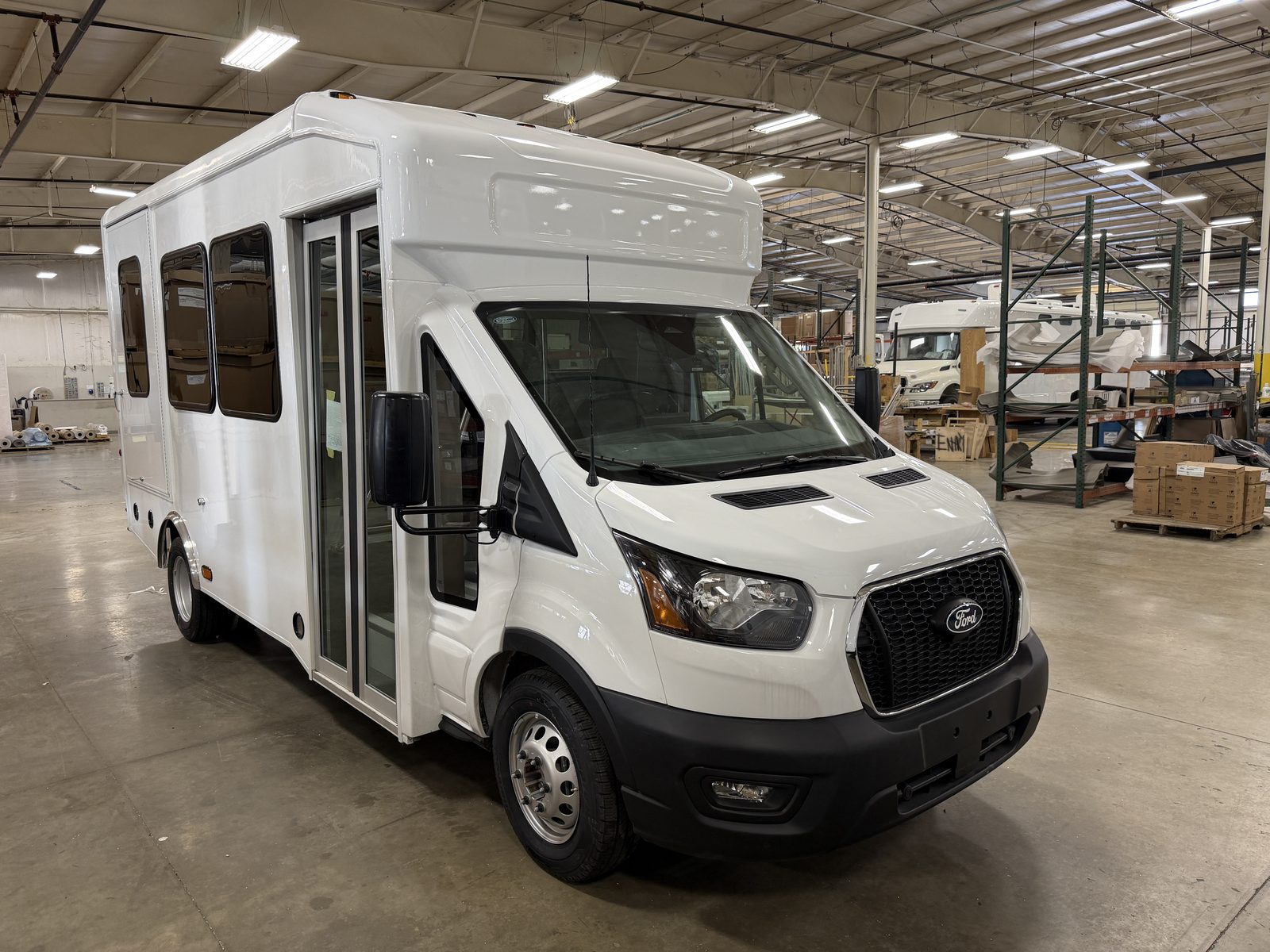
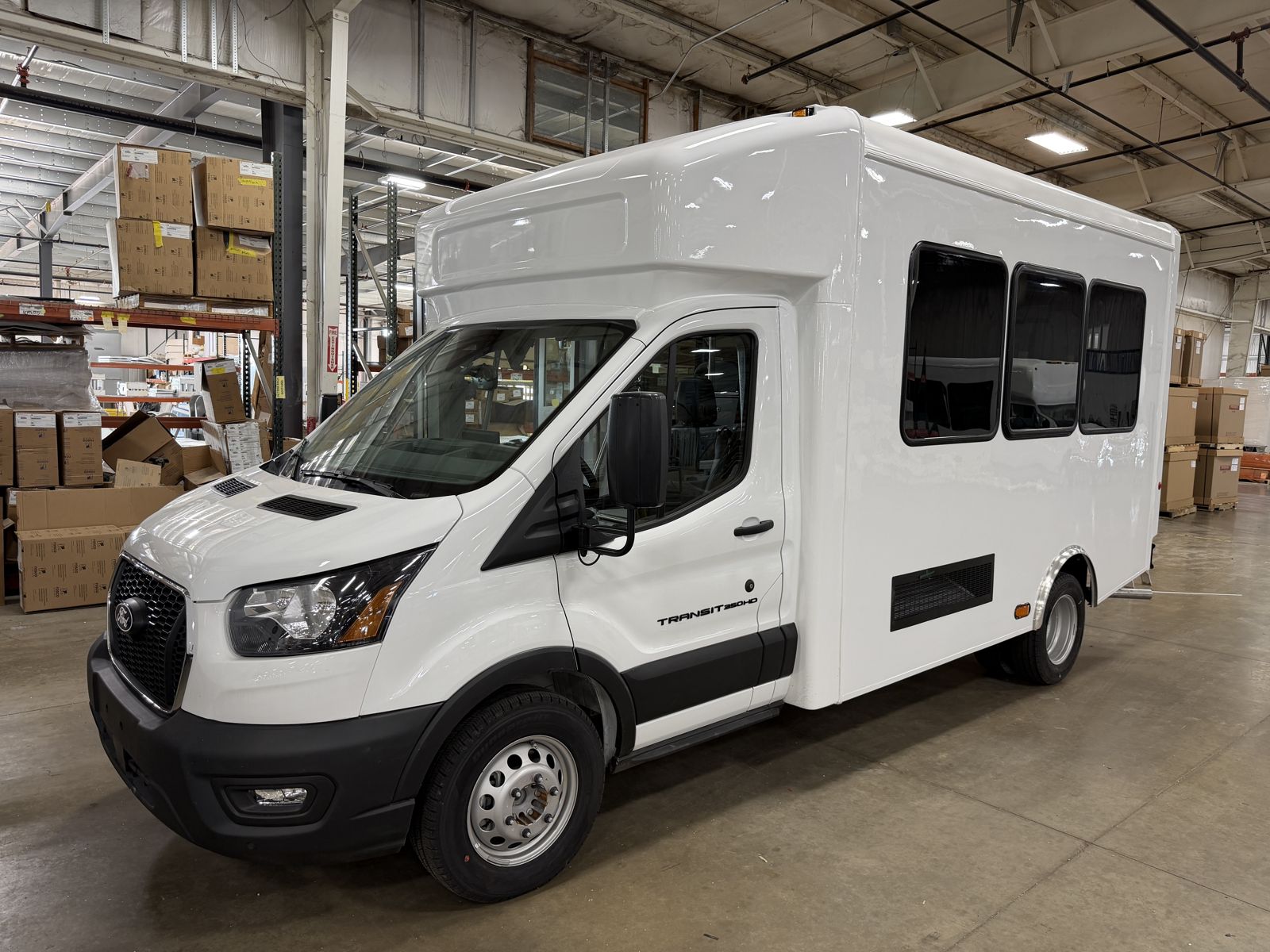
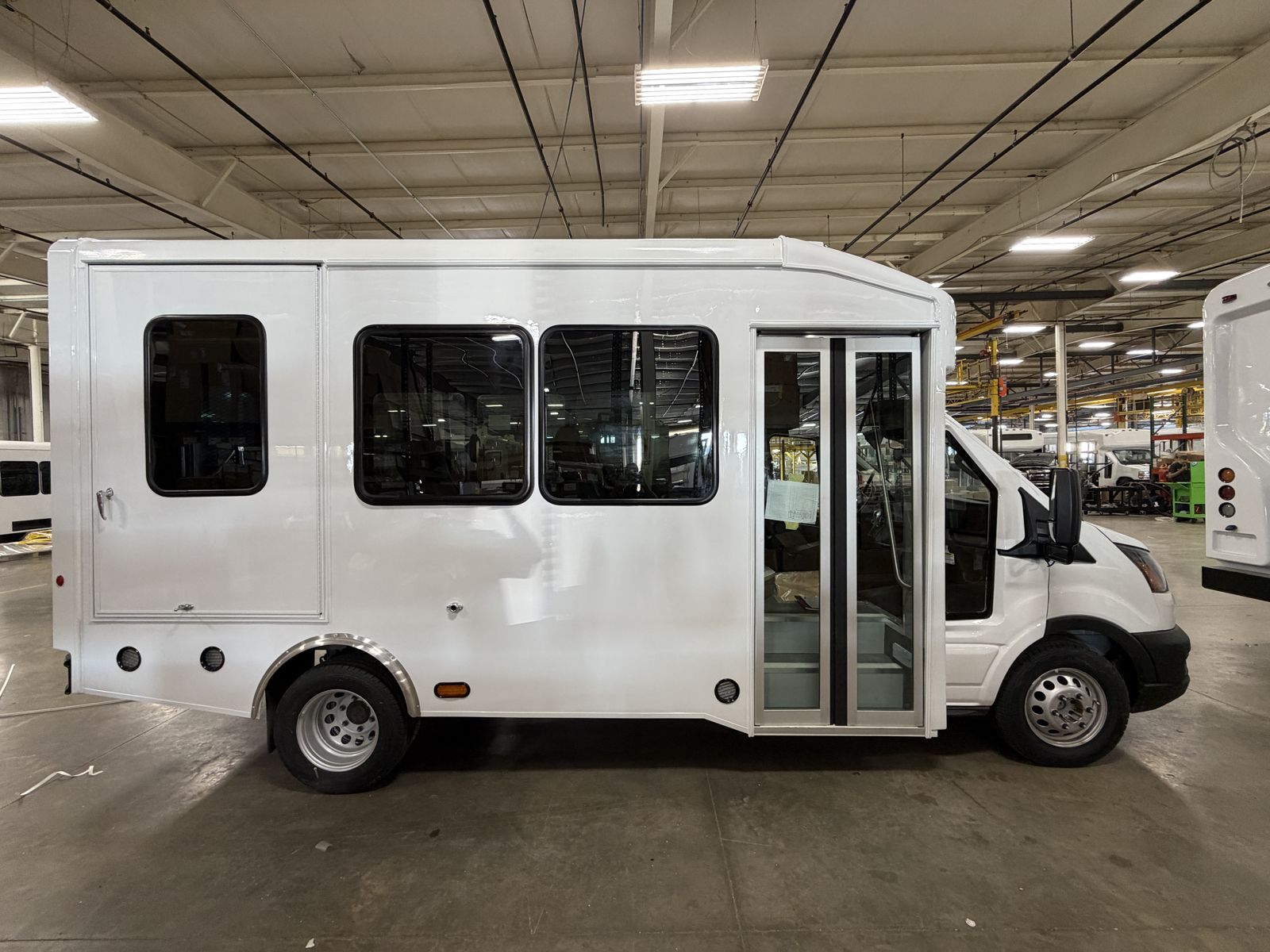
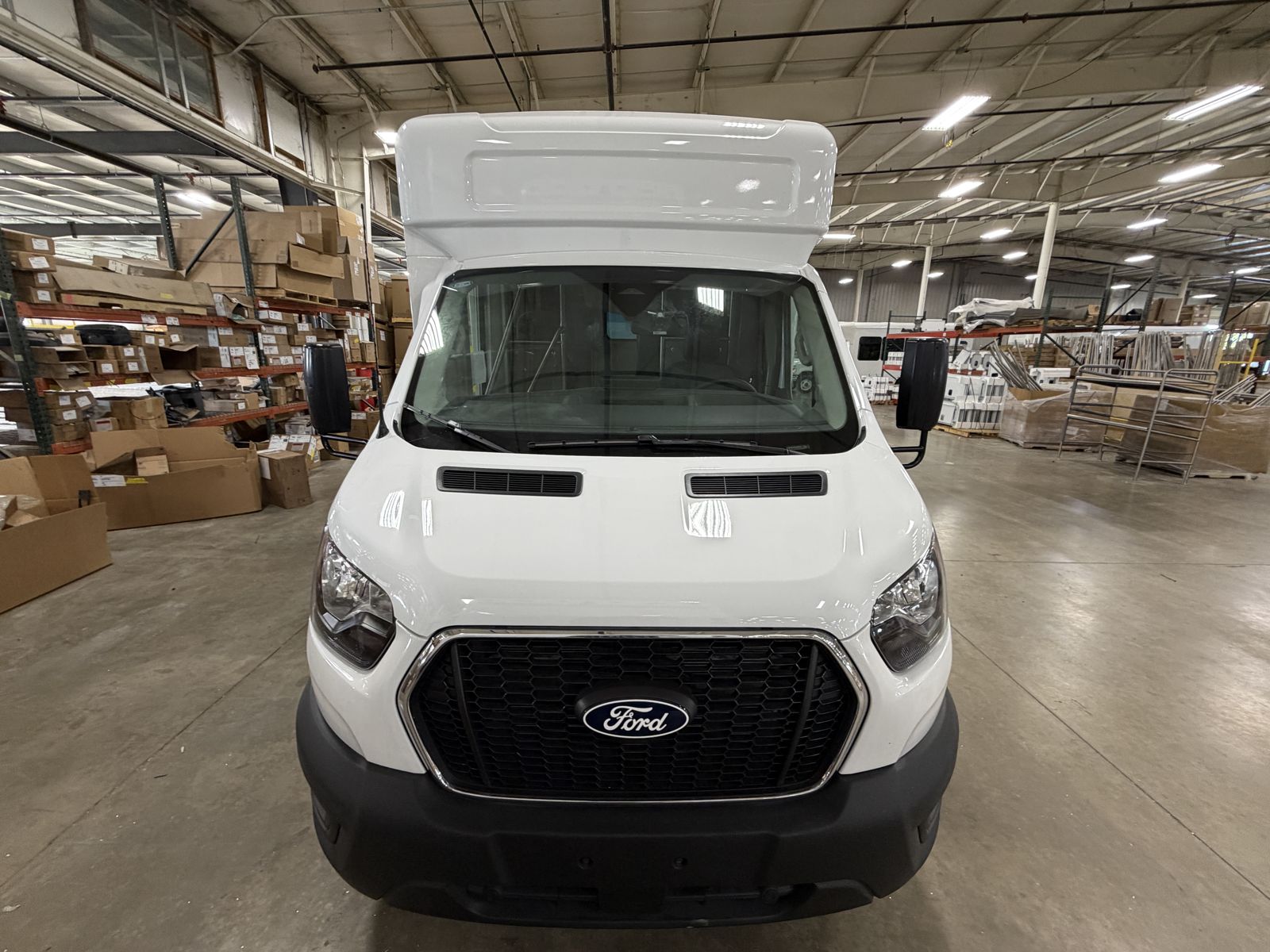
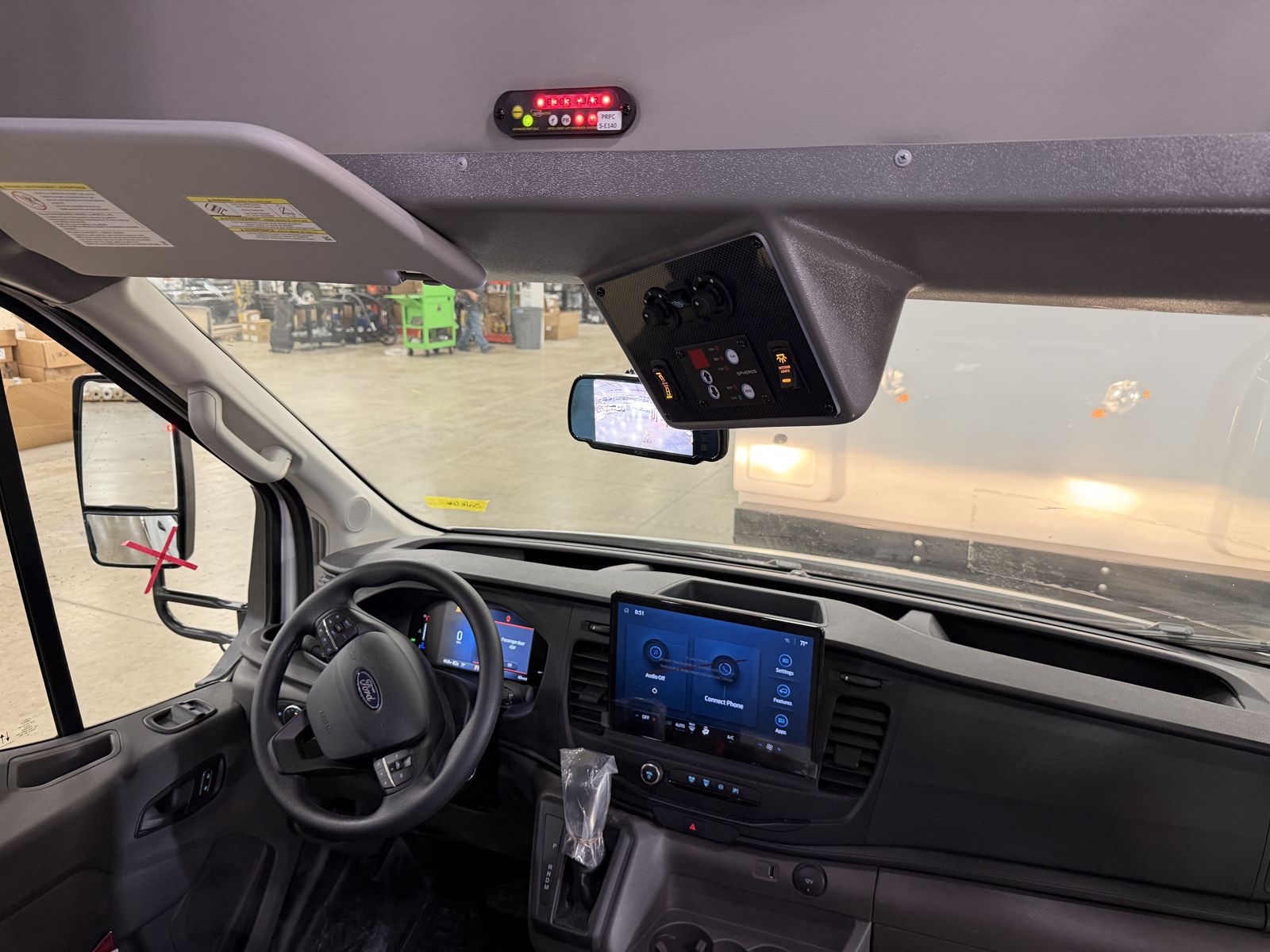
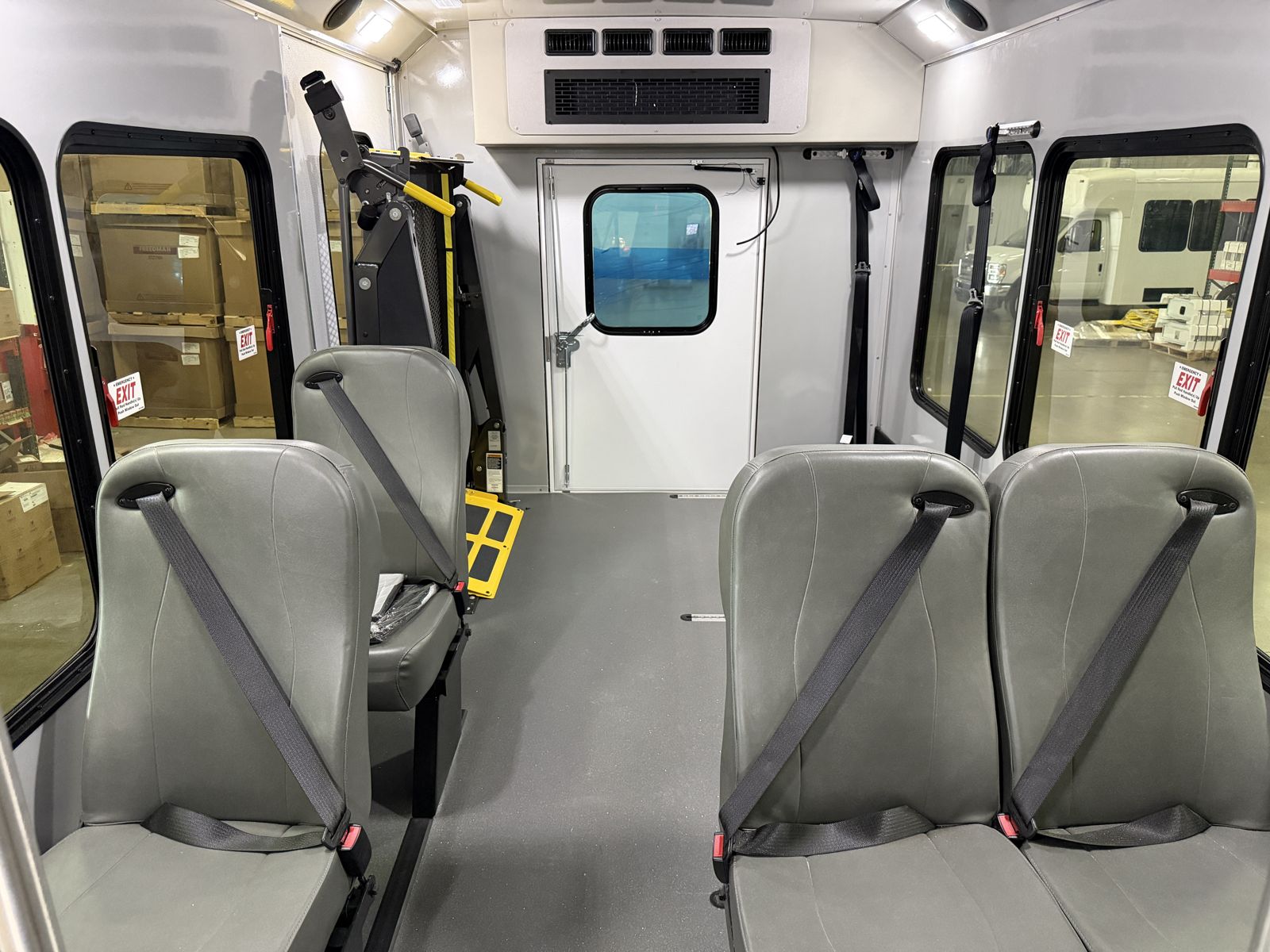
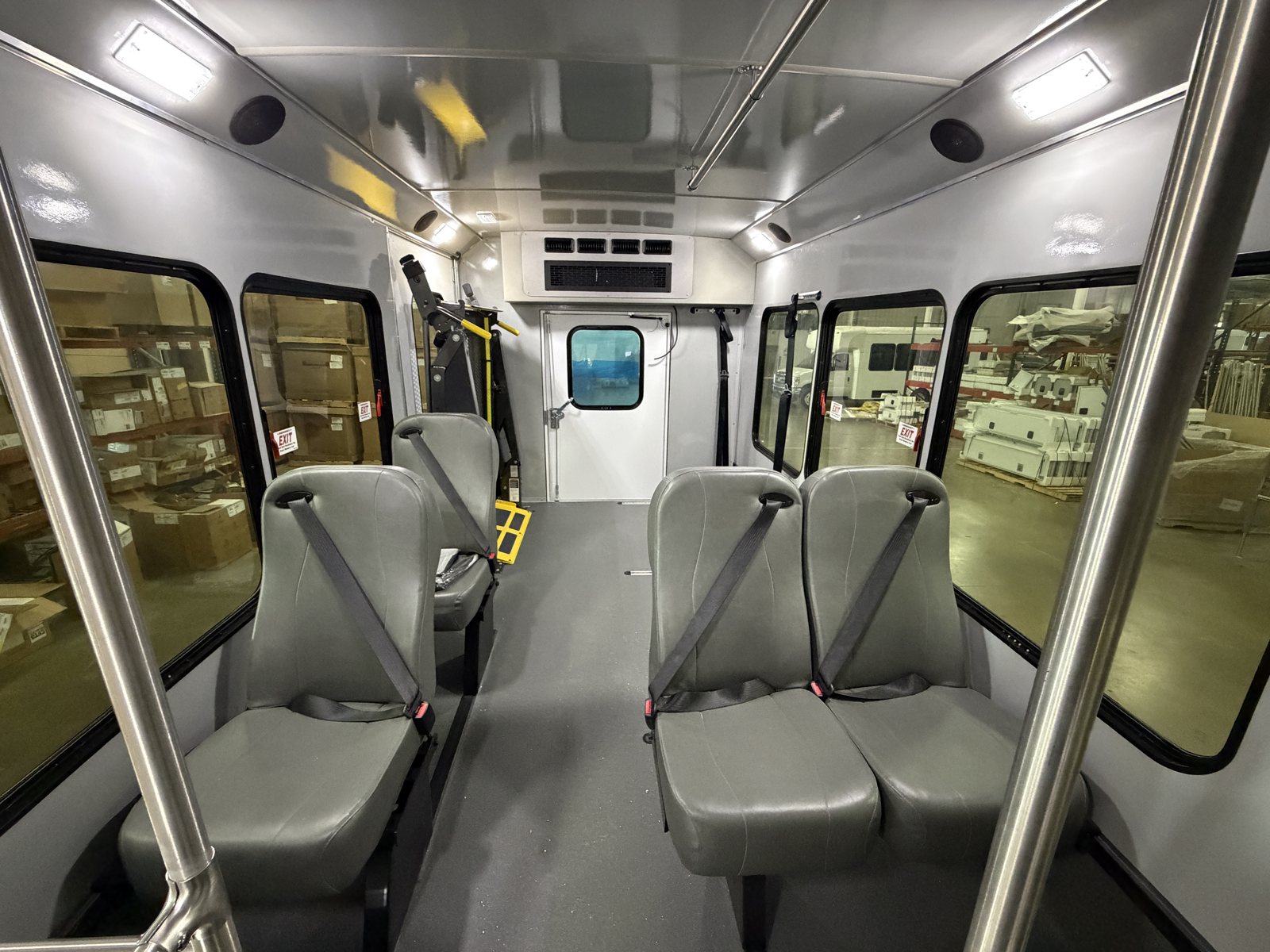
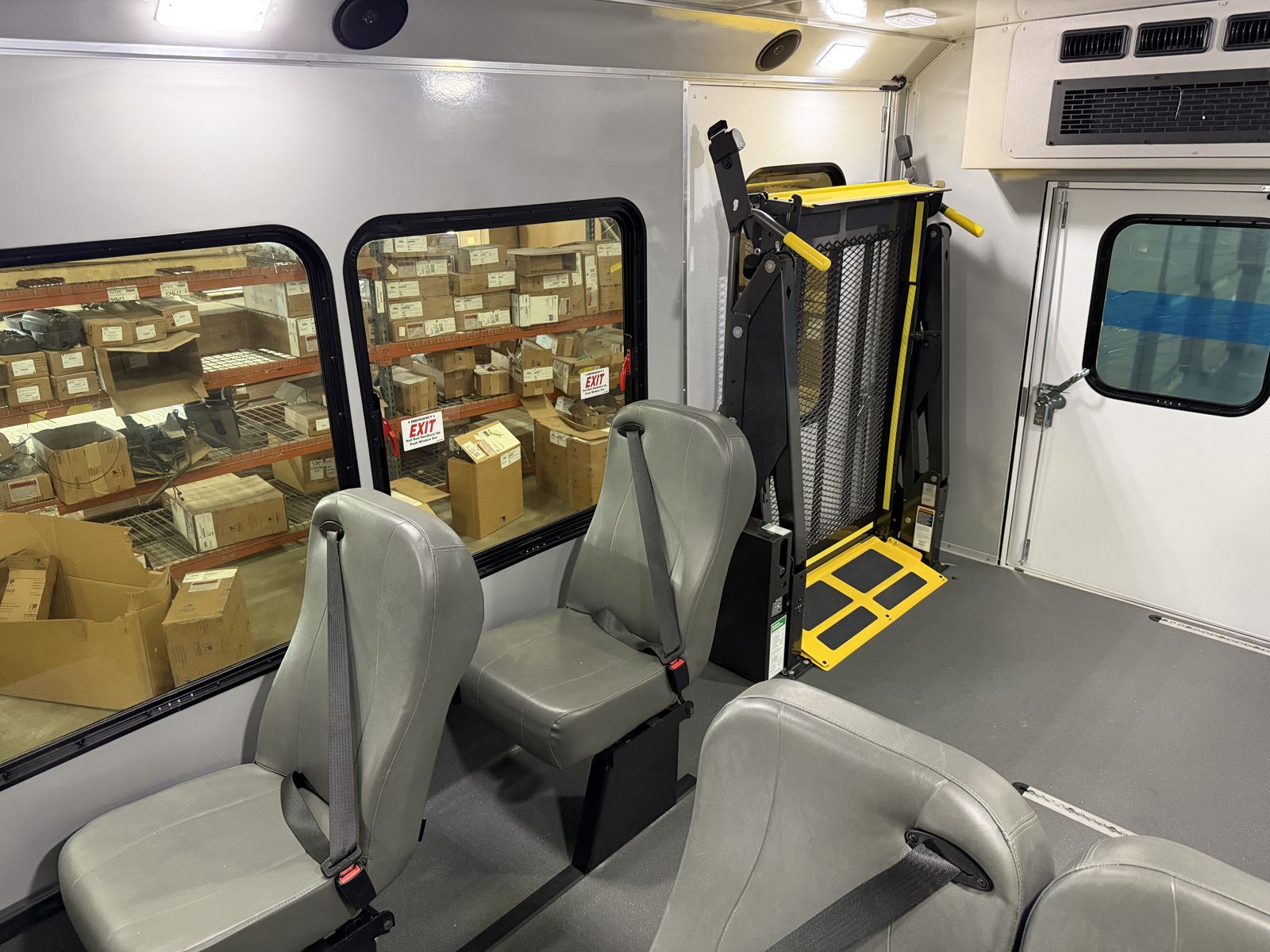
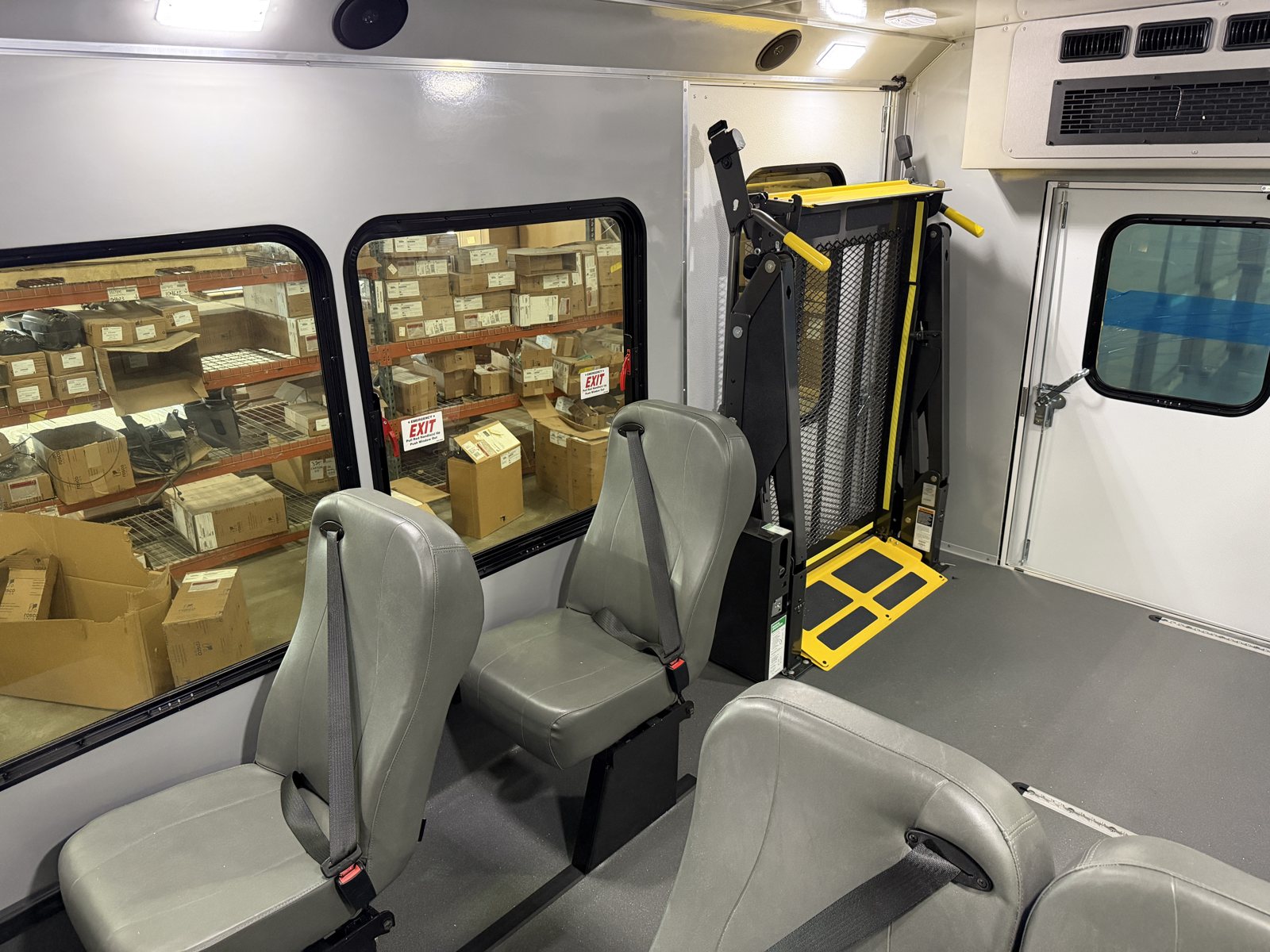
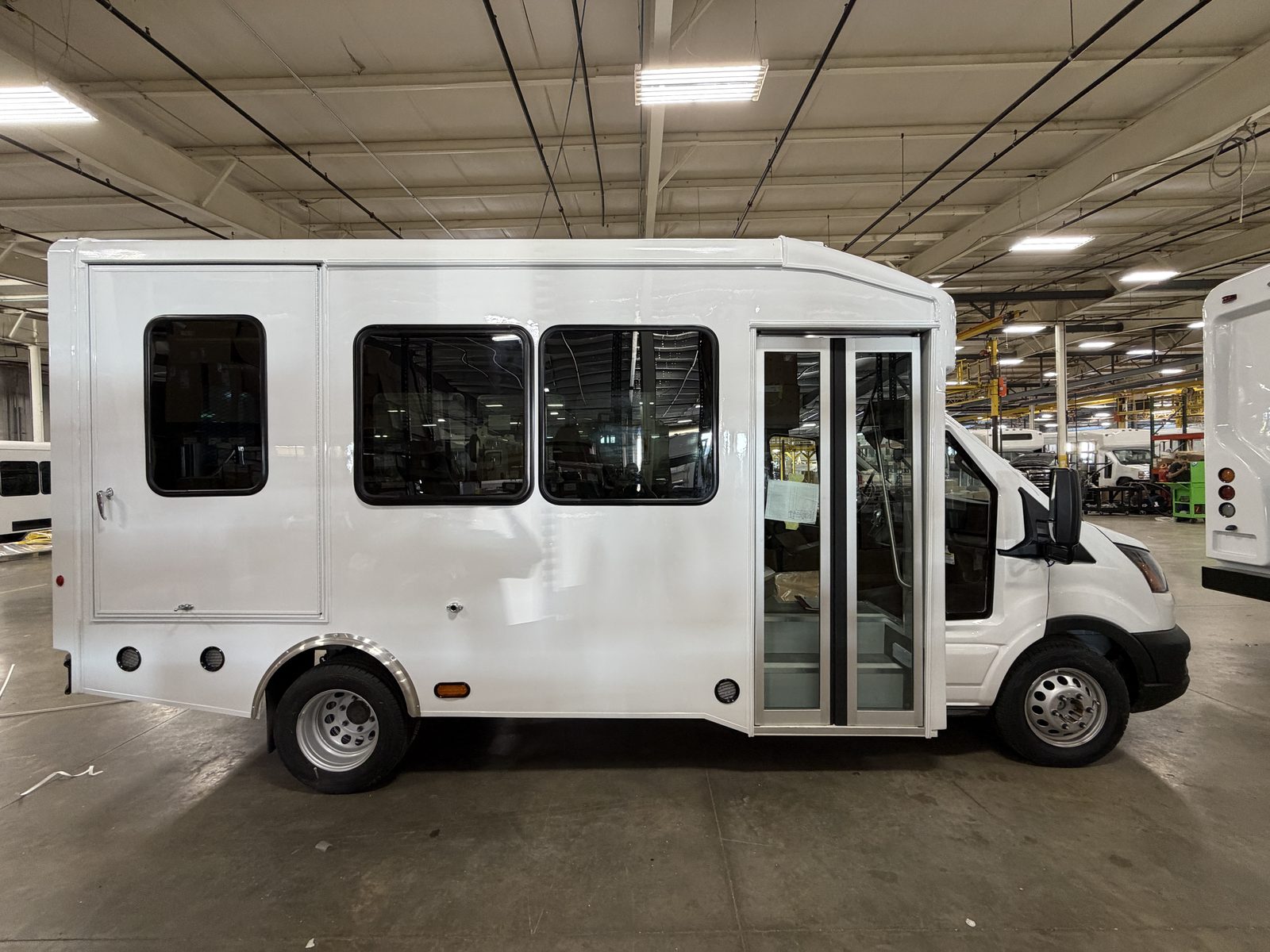
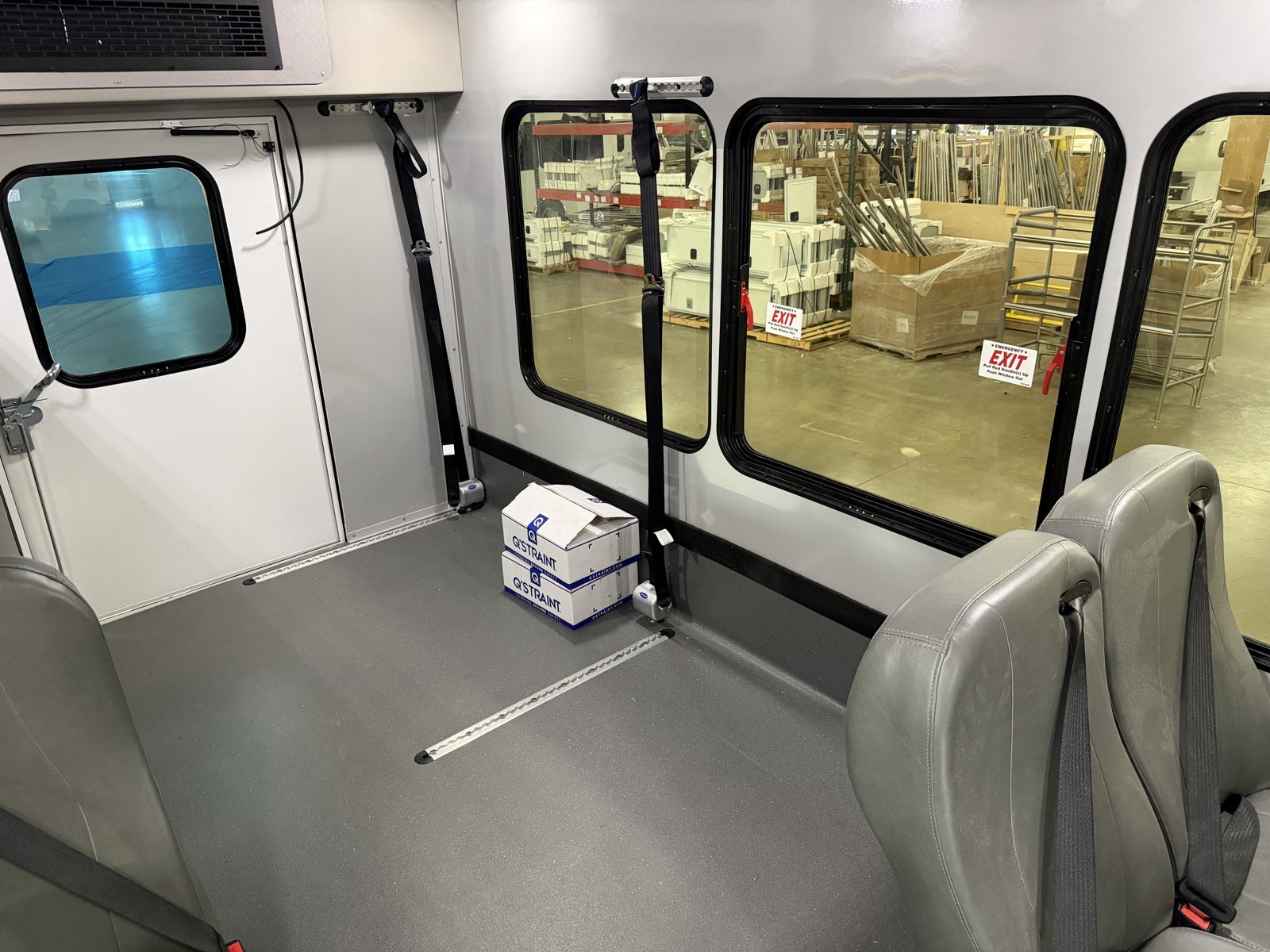
On paper, the STRYKR looks like a puzzle: it seats fewer people than a MAVRYK and the Transit chassis costs more than the E-Series it competes with. Then you drive one.
The Transit body is narrower and the driving position is lower, so the STRYKR feels like a big van, not a bus. There's no learning curve. A front-desk employee, a volunteer, an activities director who drives twice a week — they get in and go. On a full-width shuttle, that same occasional driver is the one clipping mirrors, curbing wheels, and scraping the body in the parking garage. Body damage is a real operating cost, and the easiest way to cut it is a vehicle your people aren't afraid of.
That's who the STRYKR is for: operations where the drivers aren't professional bus drivers, and cities where the streets weren't built for full-width vehicles. Hotel and airport routes through tight urban blocks. Assisted living communities where staff rotate driving duty. Downtown shuttles that spend all day in traffic and parking structures.
You give up interior width — the MAVRYK's wider aisle is the reason it exists. What you get back is a bus anyone on staff can drive confidently on day one.
Need a wider aisle or more seats? Look at the MAVRYK.
| Spec | STRYKR |
|---|---|
| Capacity & configuration | |
| Passenger capacity | Up to 14 passengers · up to 6 wheelchair positions |
| Model sizes | HLE-21 – HLE-24 |
| Typical build time | 90–120 days from order · 2026 average: 92 days |
| Luggage options | Rear compartment · overhead · interior rack |
| Passenger seat width | 17.5 in standard · 15.5 in option · 19 in upgrade |
| Seat spacing | 26 – 42 in, typically 31 – 34 in by floor plan |
| Chassis & driveline | |
| Chassis options | Ford Transit T-350 |
| Engine | Ford 3.5L gas |
| GVWR | 9,950 – 11,000 lb |
| Fuel options | Gas · Propane · CNG |
| Fuel tank capacity | 25.1 gal standard · 31 gal extended range |
| Alternator | 250 A |
| Dimensions | |
| Wheelbase | 138 – 156 in |
| Body length | 150 – 187 in |
| Body width (mirrors excluded) | 84 in |
| Interior width | 80 in, inside wall to inside wall |
| Overall height | 118 in without roof-mounted A/C — a roof-mounted A/C adds to this |
| Interior standing height | Raised floor 82 in · standard floor 86.5 in |
| Entry steps | 3-step entry (raised floor) · 2-step entry (standard floor) |
| Step riser / run | Raised floor 11 in rise × 11 in run · standard floor 8 in × 8 in |
| Ground to first step | 11.5 in |
| Aisle width | 22 in (seat to seat, without armrests) |
| Overall length | Published per floor plan — see the floor plan library |
| Accessibility | |
| Entry door width | 36 in rough opening (33 in clear) · 42 in rough opening optional |
| Entry door opening height | 82 in (floor to opening) |
| Wheelchair lift | Braun 800 – 1,000 lb · platform 34×51, 34×54, 37×51 or 37×54 in |
| Comfort & climate | |
| Air conditioning capacity | 55,000 – 100,000 BTU |
| Fuel economy | 7.6 / 10.5 / 13.0 mpg — independent FTA Altoona result for a comparable Transit-chassis shuttle, same three duty cycles. STRYKR’s own test is in progress. |
| Construction | |
| Body structure | 1 in × 1.5 in welded steel cage, fully powder-coated |
| Sidewalls | Pressure-laminated one-piece, bonded to the steel structure — no beltline seam |
| Roof | One-piece Impact Guard (grade IG03), fiberglass-reinforced polypropylene |
| Sub-floor | PerformMAX 500 with Ovation overlay |
| Insulation | 1 in closed-cell EPS foam board, cut to fill each wall cavity · insulation R-3.9 |
| Wiring | Custom-built wiring and harnesses per HLE brand · Amphenol / Molex marine-grade connectors |
| Leak test | Every bus rain-tested before delivery, with an inspector riding inside |
| Warranty & testing | |
| Warranty | 3yr/36K bumper-to-bumper · 5yr/100K structural body · 7-year subfloor |
| Air conditioning warranty | By installed system — Spheros up to 5 years / unlimited miles · Trans/Air 2 years standard, extensions available |
| Testing | FMVSS compliant · FTA Altoona test in progress |
Reading the fuel economy numbers. The EPA does not rate cutaway shuttle buses, so there is no window sticker. These come from the FTA’s Altoona test, which measures fuel use on three federal duty cycles on the same dynamometer for every builder. Manhattan is dense stop-and-go at low average speed — the hardest work a shuttle does. Orange County Bus Cycle is a mixed suburban route with regular stops, closest to how most shuttles actually run. HD-UDDS is urban plus sustained highway, what an airport run or a longer charter looks like. Numbers are comparable between builders only when both buses were tested under the current protocol, in place since 2016.
Specifications are from the 2026 HLE order forms and published chassis data, and vary by chassis and configuration. Confirm the exact build with your dealer before writing a purchase order. Overall length and step riser height are published per configuration — ask your dealer or call 574-343-2150.
No — that's the point of it. It's built on the Ford Transit, so the width, driving position, and handling are van-like. Drivers who have never operated a bus adjust immediately.
Under federal rules, a CDL is required for vehicles designed to carry 16 or more people including the driver. STRYKR floor plans seat up to 14 passengers, which keeps most builds under that line. State rules and specific configurations vary, so confirm your exact build with your dealer.
The Transit chassis itself costs more than the E-Series chassis under the MAVRYK. You're not paying for size — you're paying for a bus that drives like a van, which matters when your drivers aren't professionals or your routes run through narrow streets.
Hotels, assisted living communities, churches, and downtown operators — anywhere the driver pool rotates and the routes are tight.
Need a configuration you don't see? Most layouts are buildable. Talk to your dealer or call HLE at 574-343-2150.
Every STRYKR carries the same construction: powder-coated steel cage, one-piece pressure-laminated sidewalls, 5/8" PerformMAX 500 subfloor, Impact Guard roof, in-house wiring harnesses with marine-grade connectors — and every single unit runs the rain booth and a 25-mile road test before delivery.
Why that mattersWhere this model works: Church & Ministry · Assisted Living · NEMT & Paratransit


