
Start with the question every fleet manager already knows the answer to: what kills a shuttle bus? Rot, rust, and corrosion. Water finds a seam, sits in plywood, and eats the bus from the inside. Everything on our line exists to close that path.
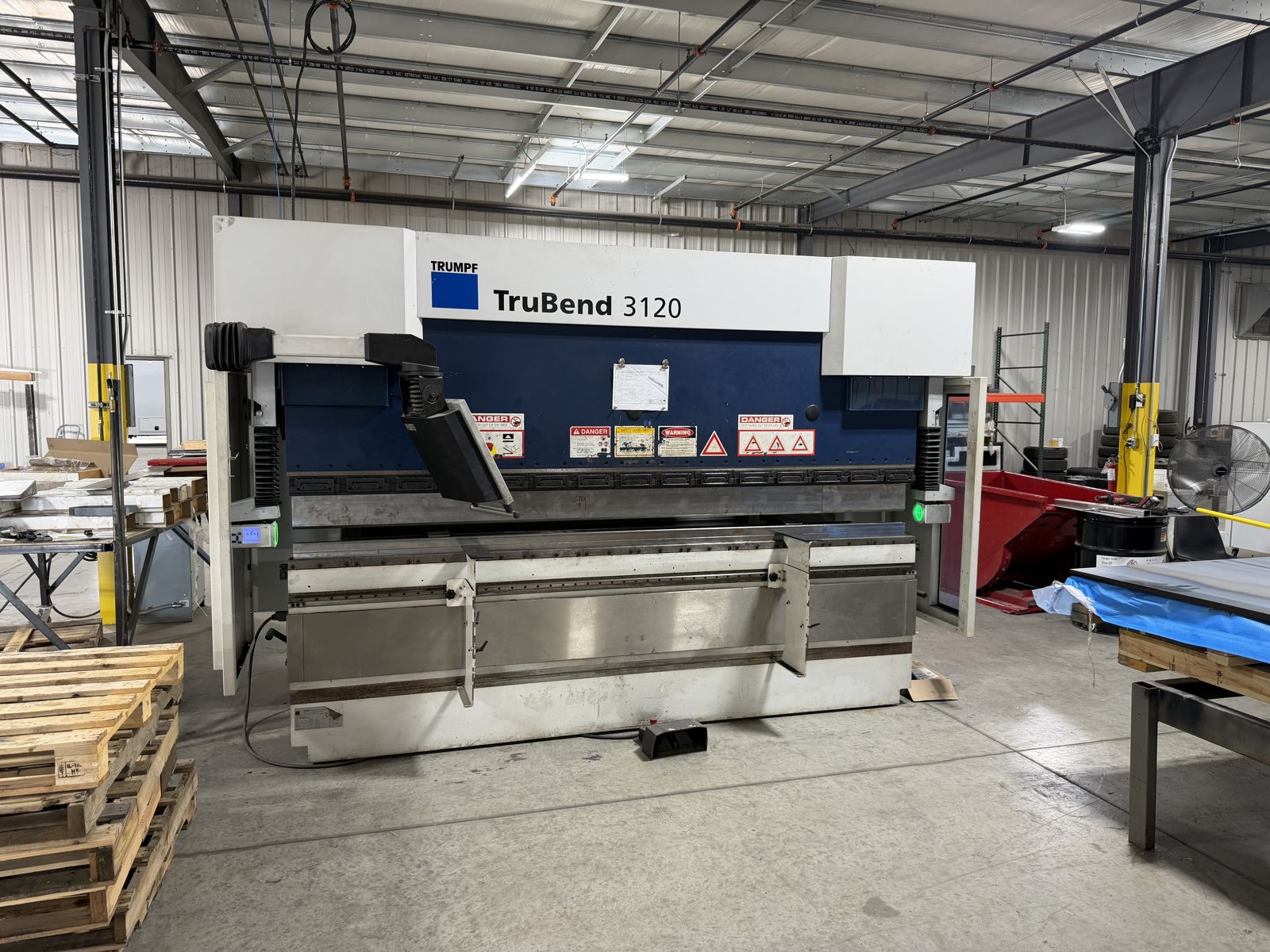
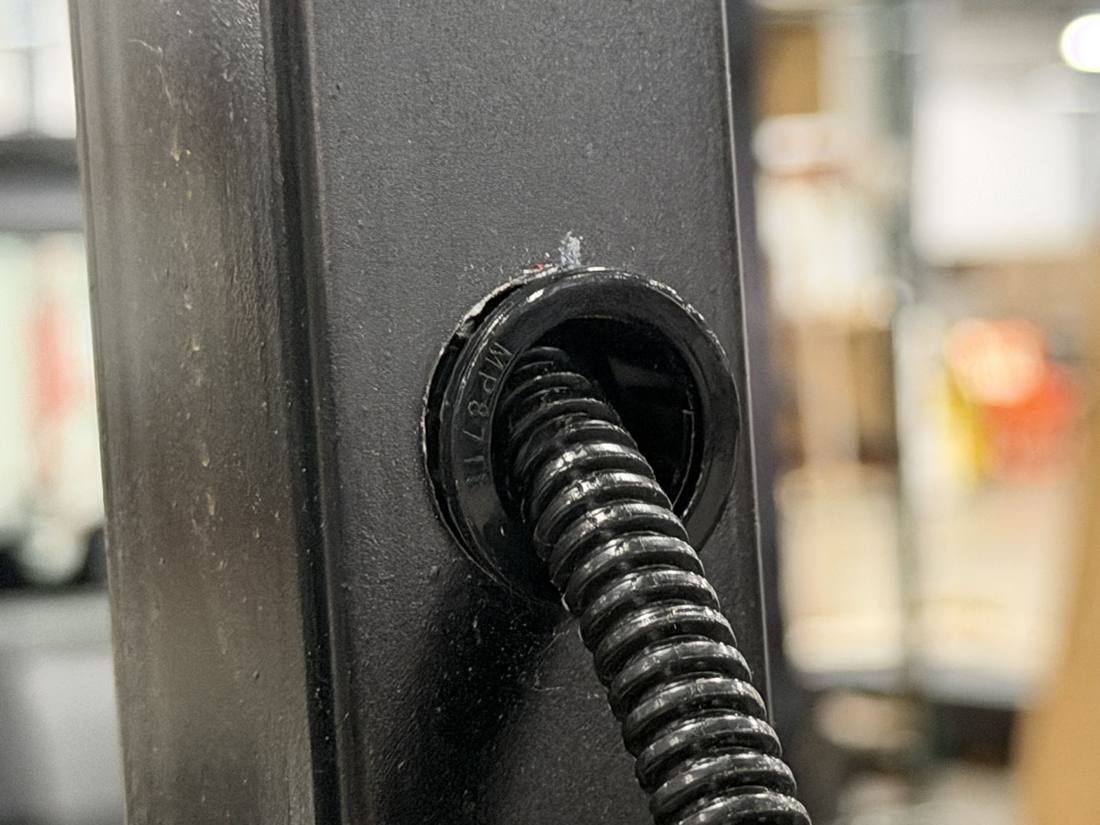
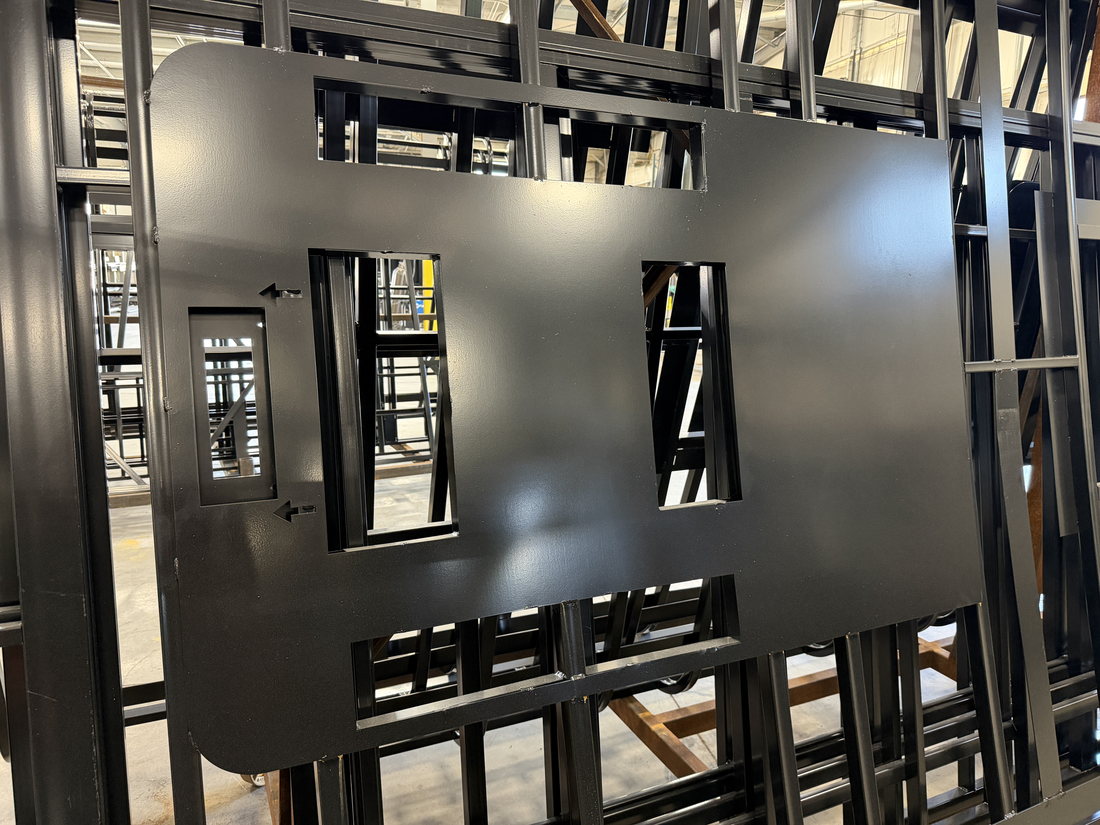
1. Steel and laser. Steel arrives pickled and oiled. Cross-members, brackets, mounts, and door frames are laser-cut and bent in-house on a TRUMPF laser and press brake: clean, burr-free, dimensionally consistent. Wire pass-throughs are lasered here too, then grommeted so wire never rides a raw edge.
2. Powder coat. Sandblast, chemical wash and rinse, then 400°F powder coat on every structural component. The magnetically charged powder wraps into crevices primer never reaches. Nothing structural on the bus is painted.
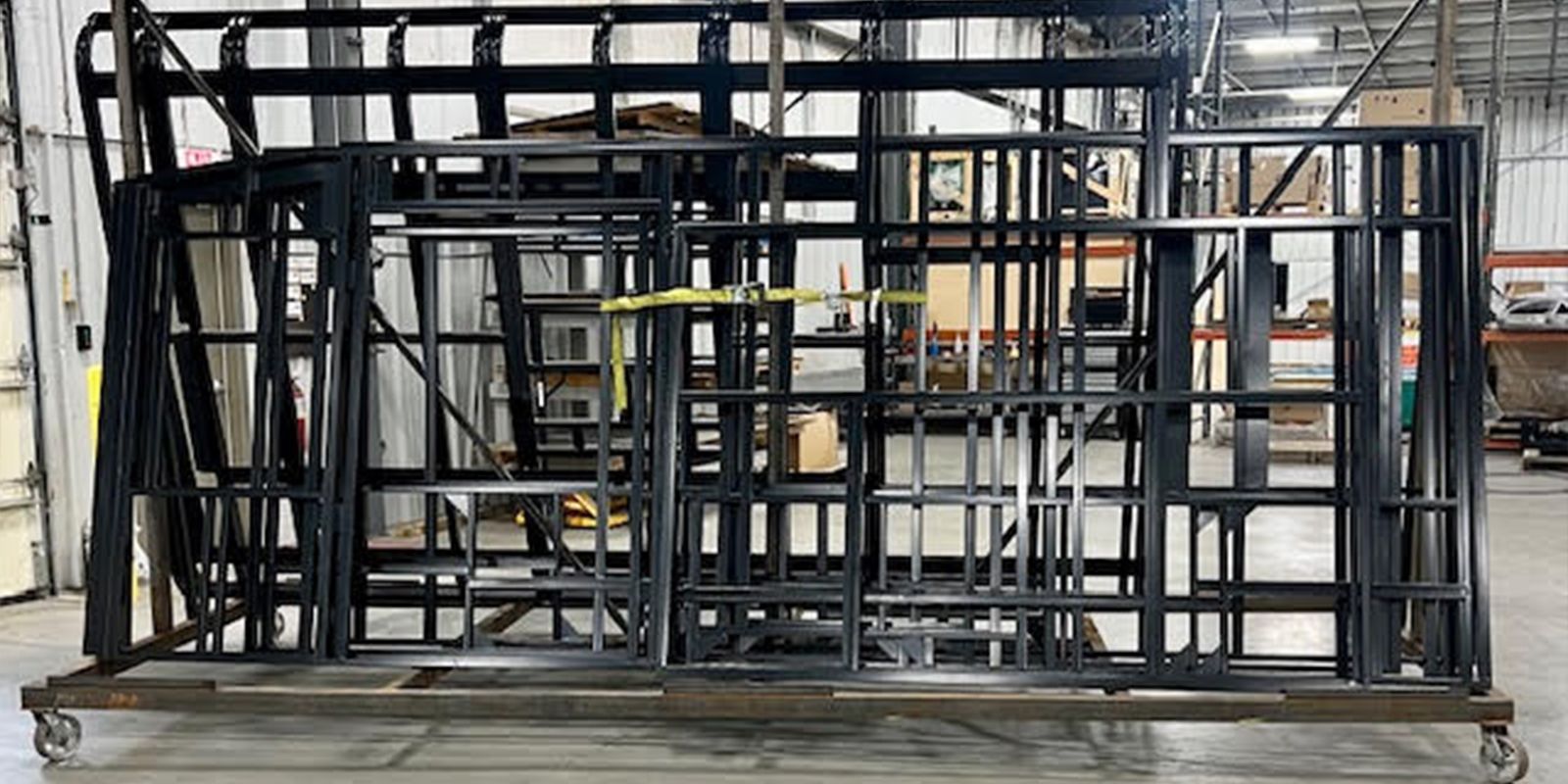
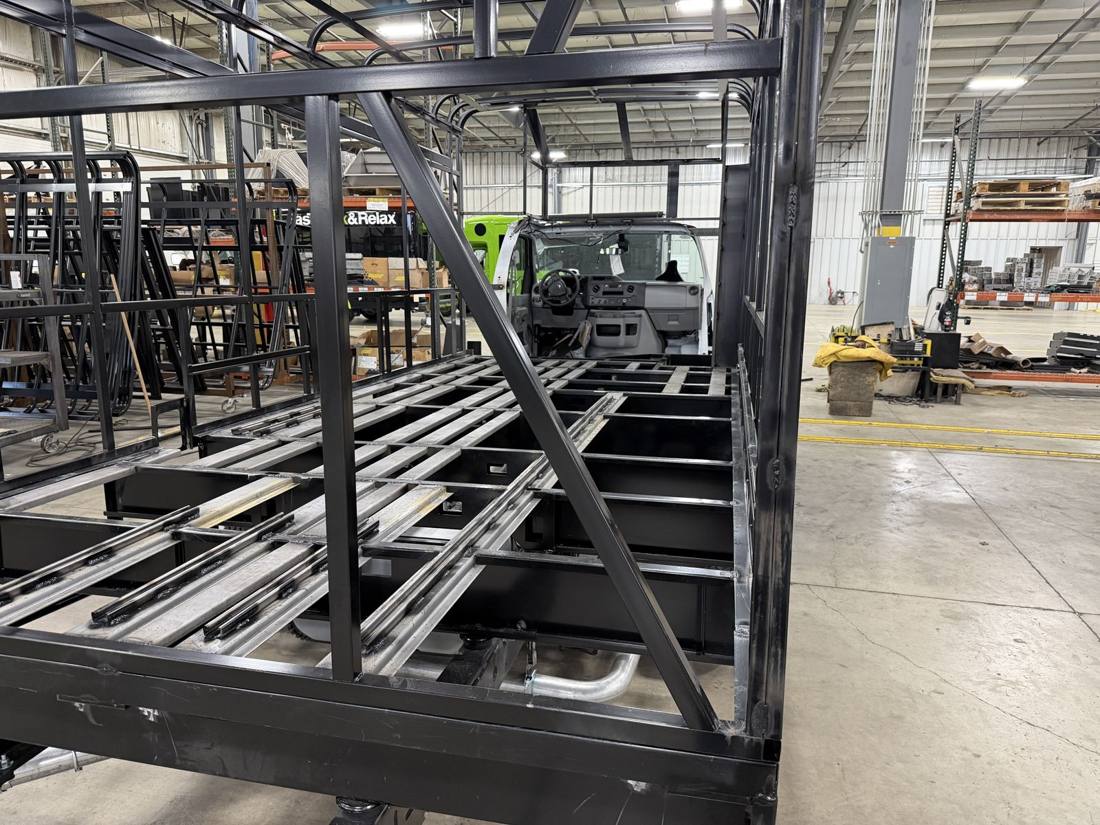
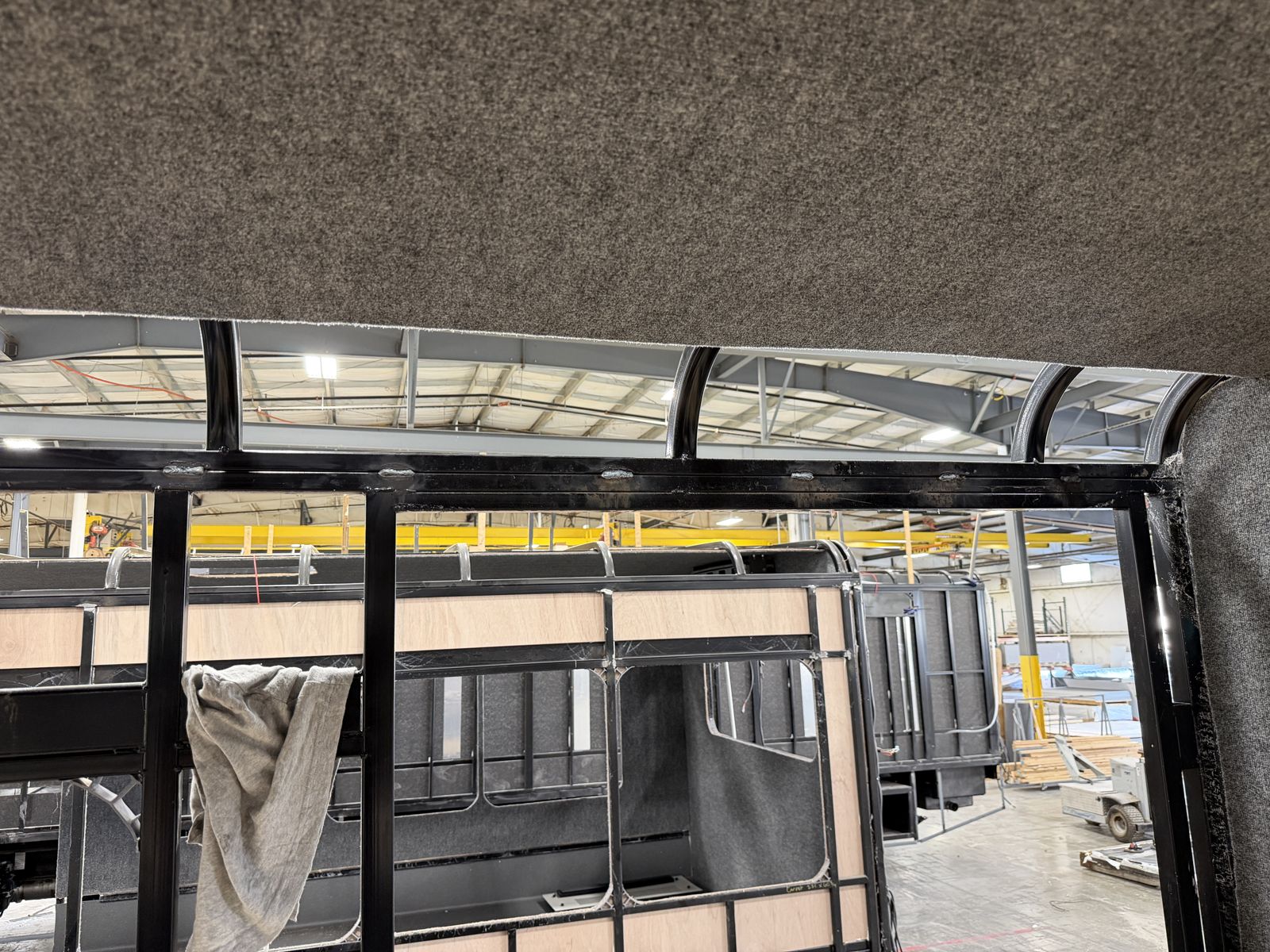
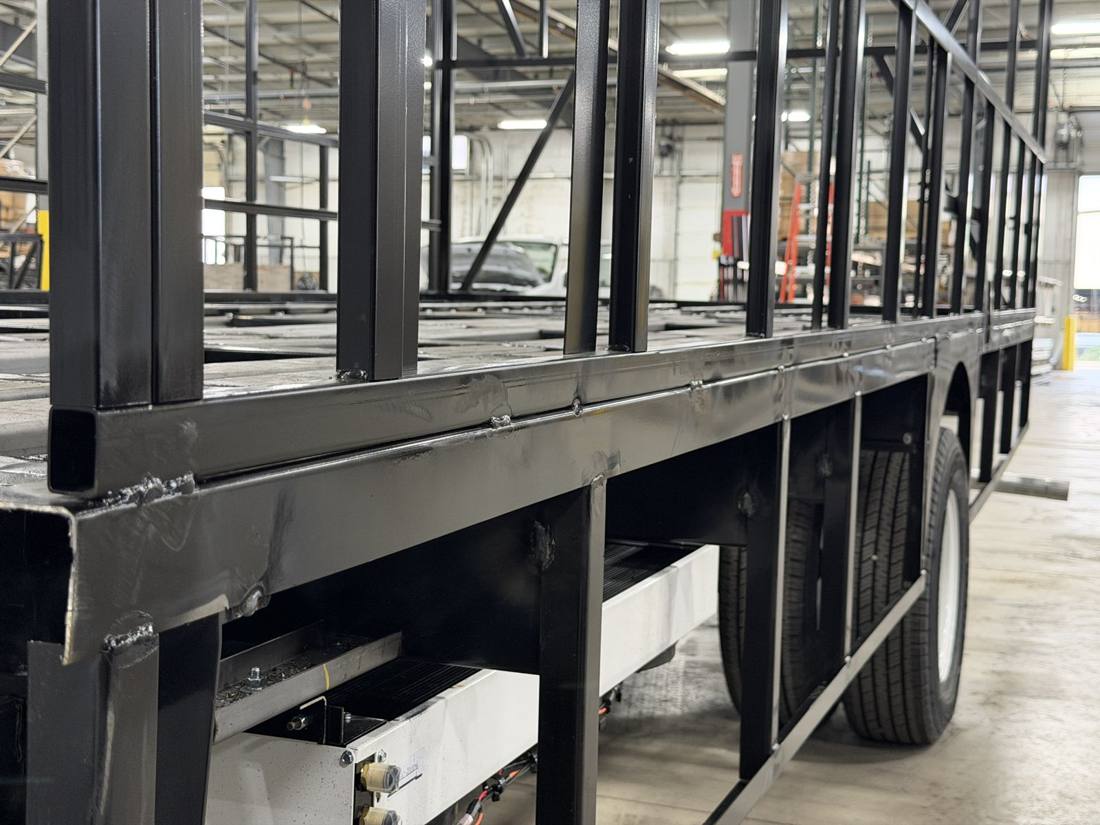
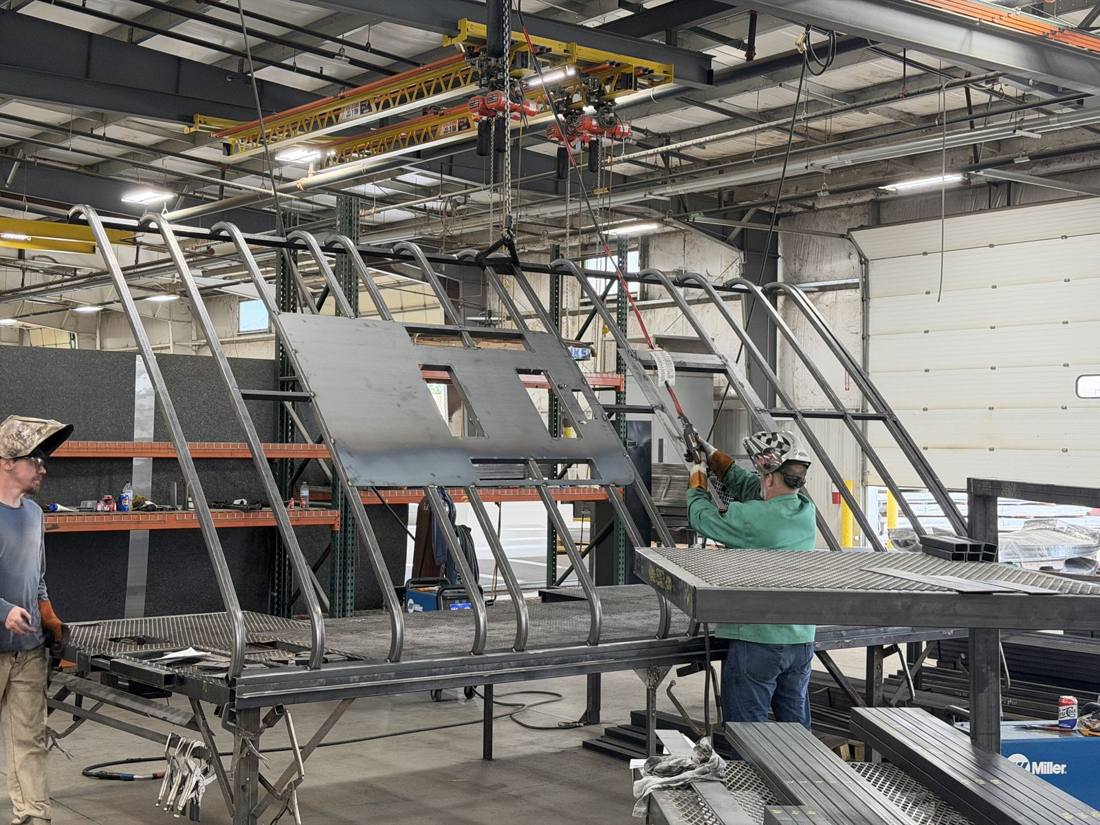
3. The cage. 1.5 × 1.5 inch, 16-gauge steel tube (1 × 1.5 on the STRYKR). Certified welders stitch-weld it, never more than 6 inches apart, directly on the chassis, step by step. Doubled roof tube. Welded rear-wall X-brace and a 45-degree brace in the rear wall that nobody else adds. Welded skirt, part of the cage rather than a bolt-on. The wheelchair door is framed inside the cage below the roof curve, so the roof is never cut for it. The entrance door hangs in a powder-coated steel portal, not a fiberglass opening. Full-perimeter welds are the standard, not a bid-spec extra.
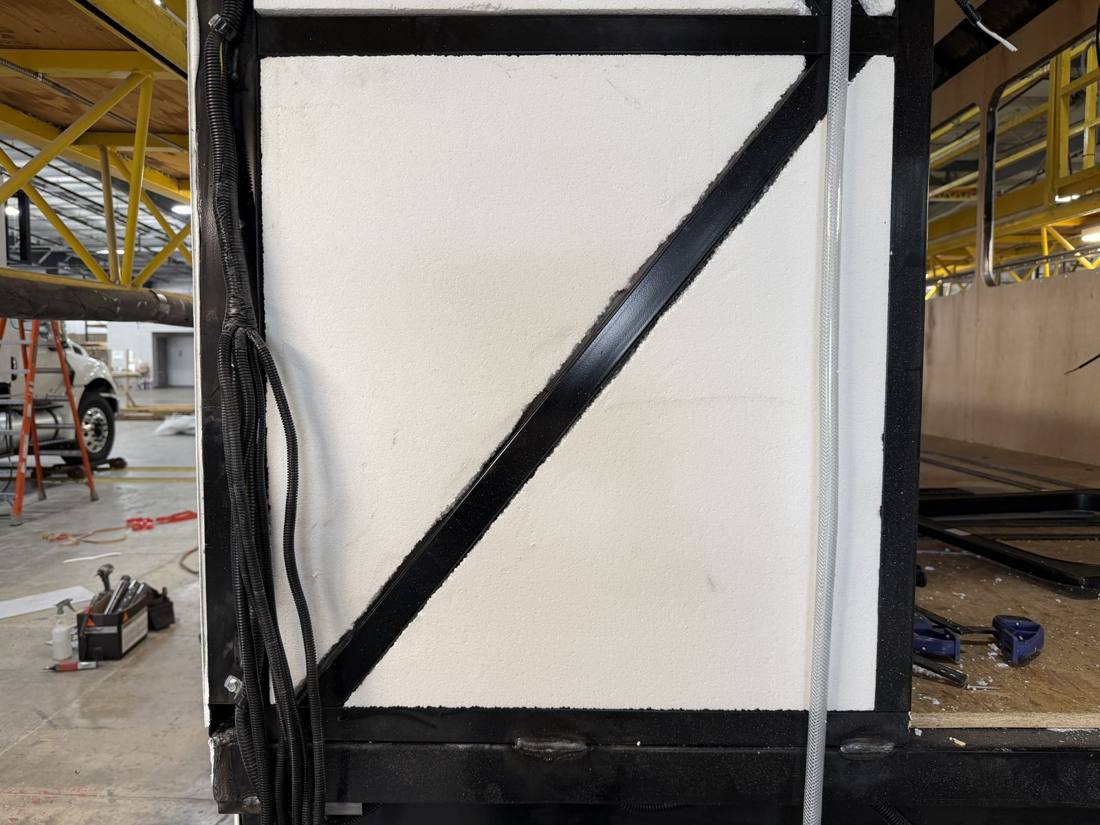
4. Foam. Every piece of insulation is closed-cell EPS board, cut to its exact frame cavity off the weld-shop prints and glued, not taped, in place. 100% coverage, no condensation pockets, and it fills the full depth of the tube so there is no air gap behind the wall.
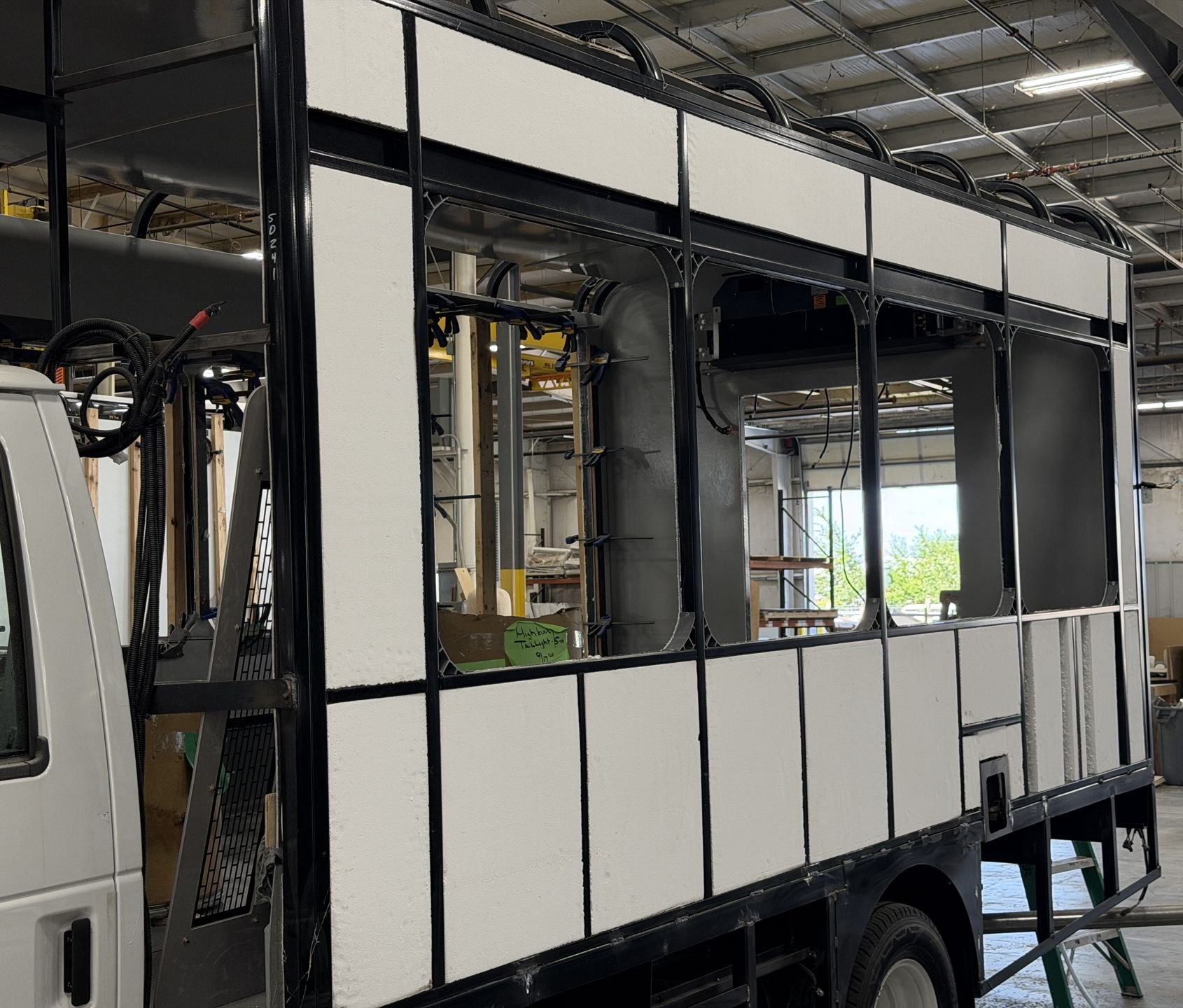
5. Lamination. The sidewall goes on as one continuous pressure-laminated panel, roofline to skirt: an Azdel inner layer that will not wick water, bonded to a Filon exterior with hot-melt adhesive, then pressed onto the steel. No beltline seam. No floor-line seam. Most buses are built from a strip above the windows, fillers between them, a strip below, and a separate skirt; every joint is a place for water to get in.
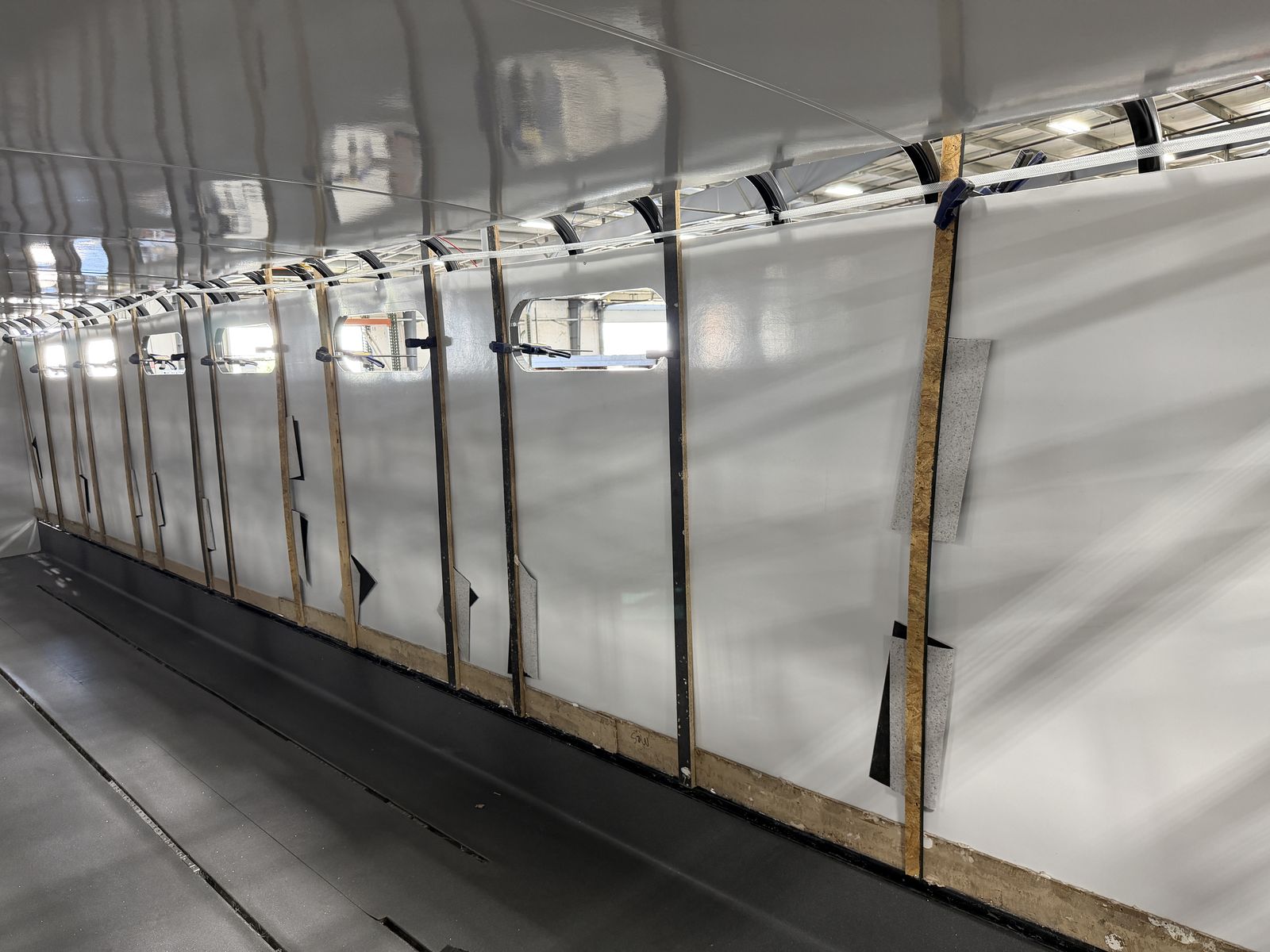
6. The roof. One piece of Impact Guard composite across the whole span, reinforced through the panel and around the roof radius, so the strength is in the structure and not in the surface. It folds back on itself without cracking. The 1/8-inch fiberglass on most buses snaps by hand and gets weaker every year in the sun. Where a roof-mounted A/C goes, a laser-cut, powder-coated steel plate is welded into the roof structure first, and the unit bolts to steel rather than to fiberglass and plywood.
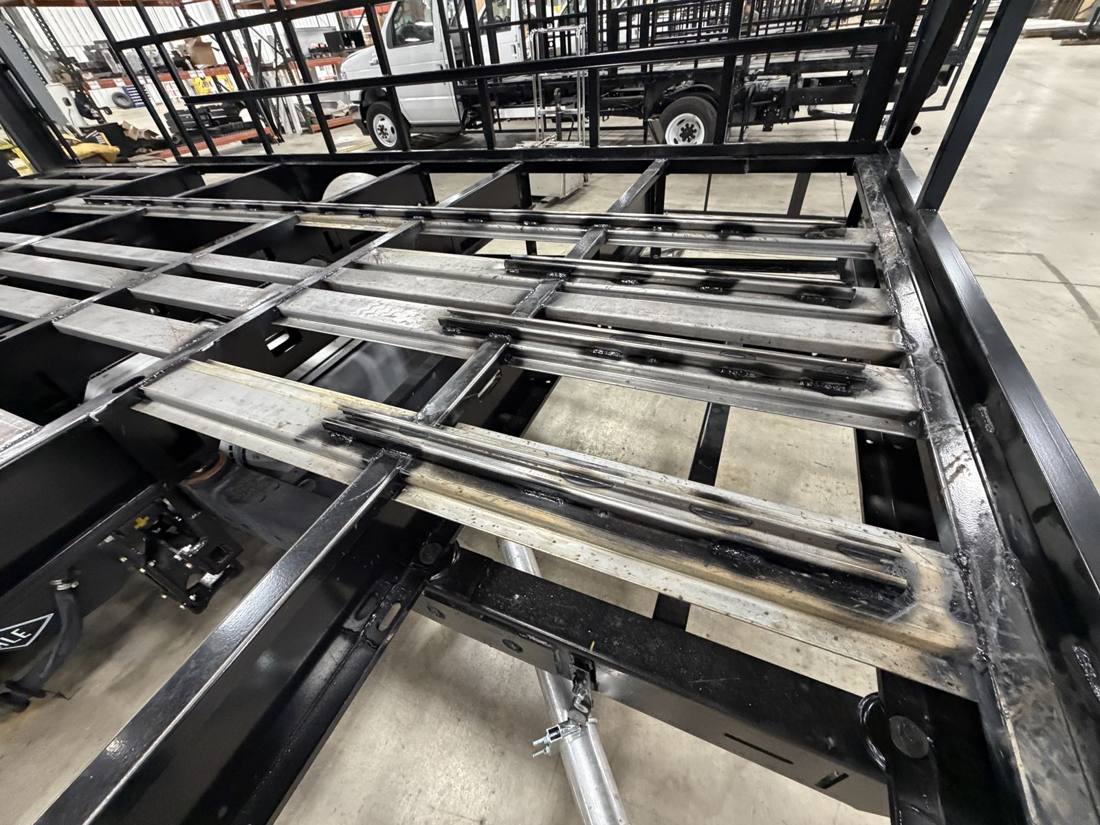
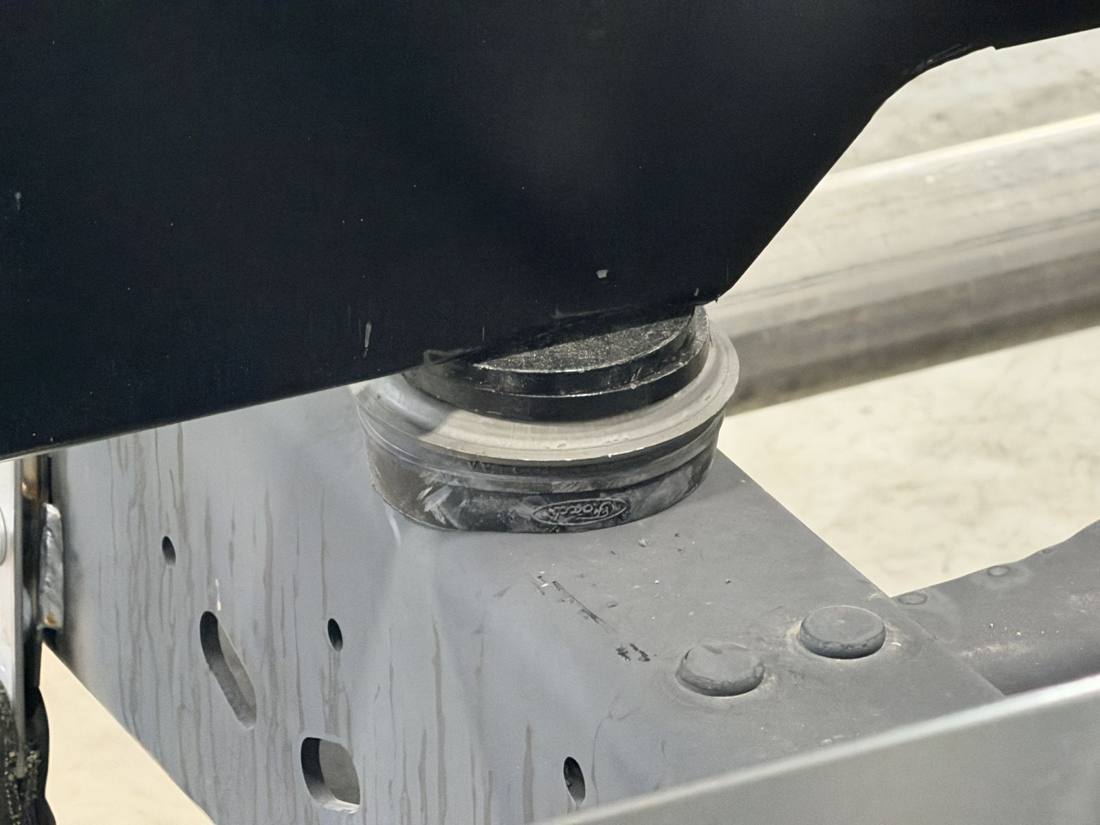
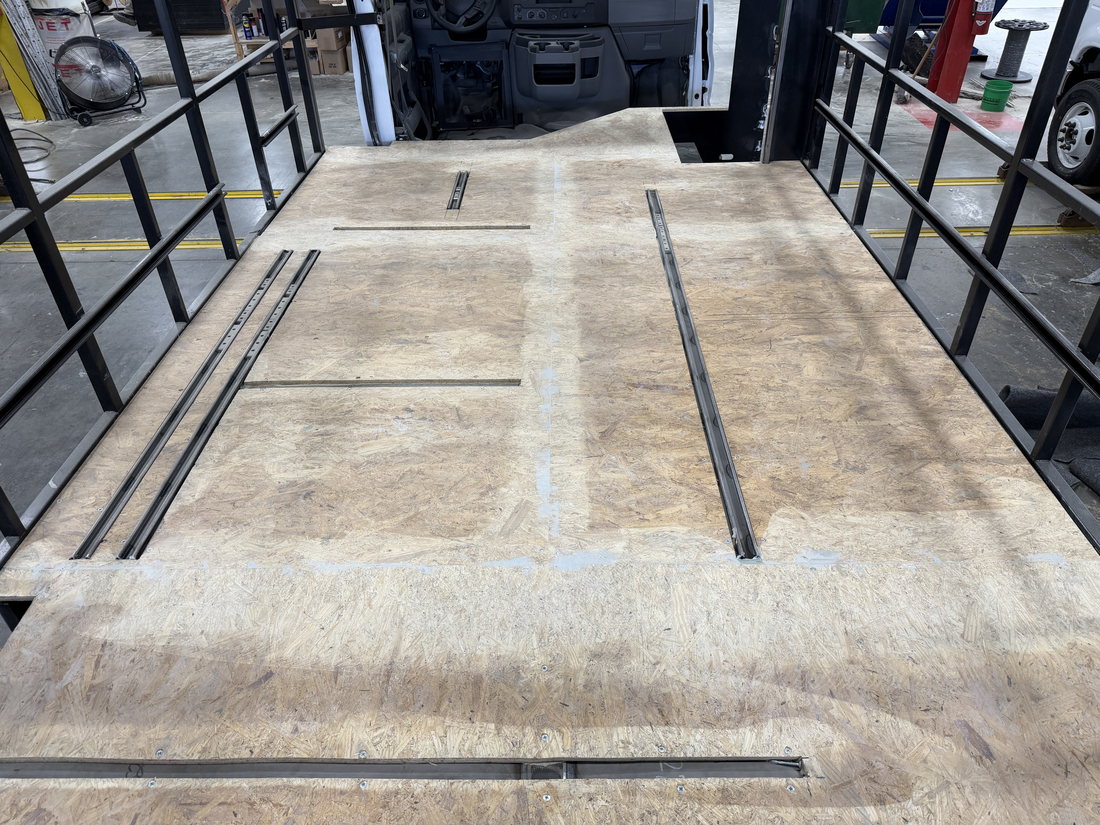
7. The floor. 5/8-inch PerformMAX 500 resin-infused subfloor on laser-cut crossmembers, edge-encapsulated in fabricated angle, sealed at every seam, with welded full-length seat track. It sheds water instead of soaking it up, which is why we can warrant it for seven years. The body sits on the frame through puck mounts, one reason the bus rides quieter than it should.
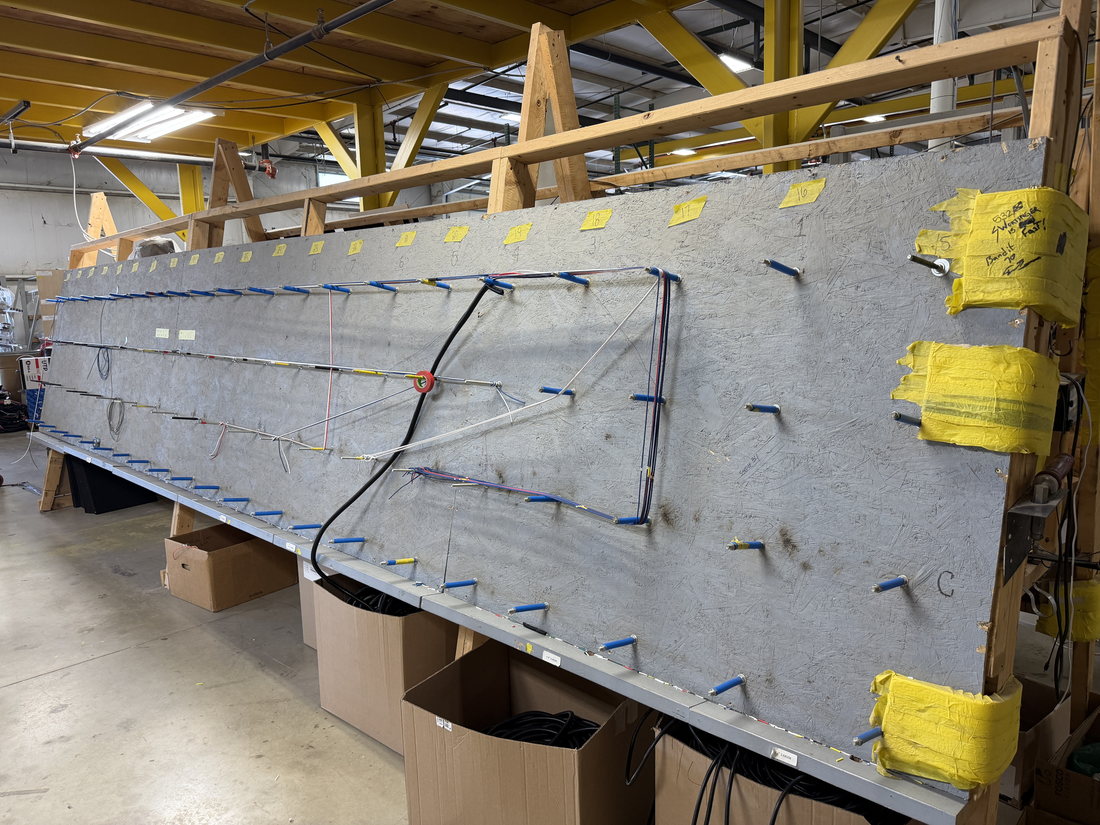
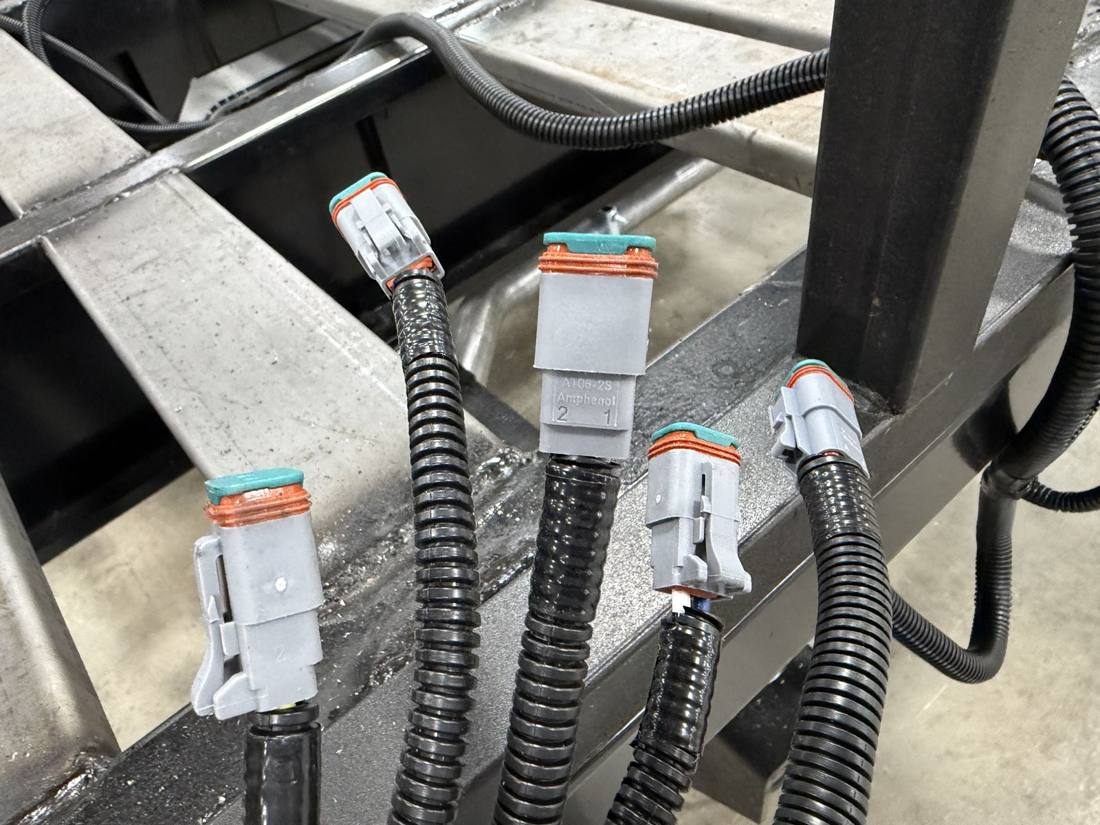
8. The harness shop. Every harness built in-house, to length, on a full-size board. Watertight marine-grade connectors. Wire loom over printed wire. Butt connectors and tap splices are banned in the building.
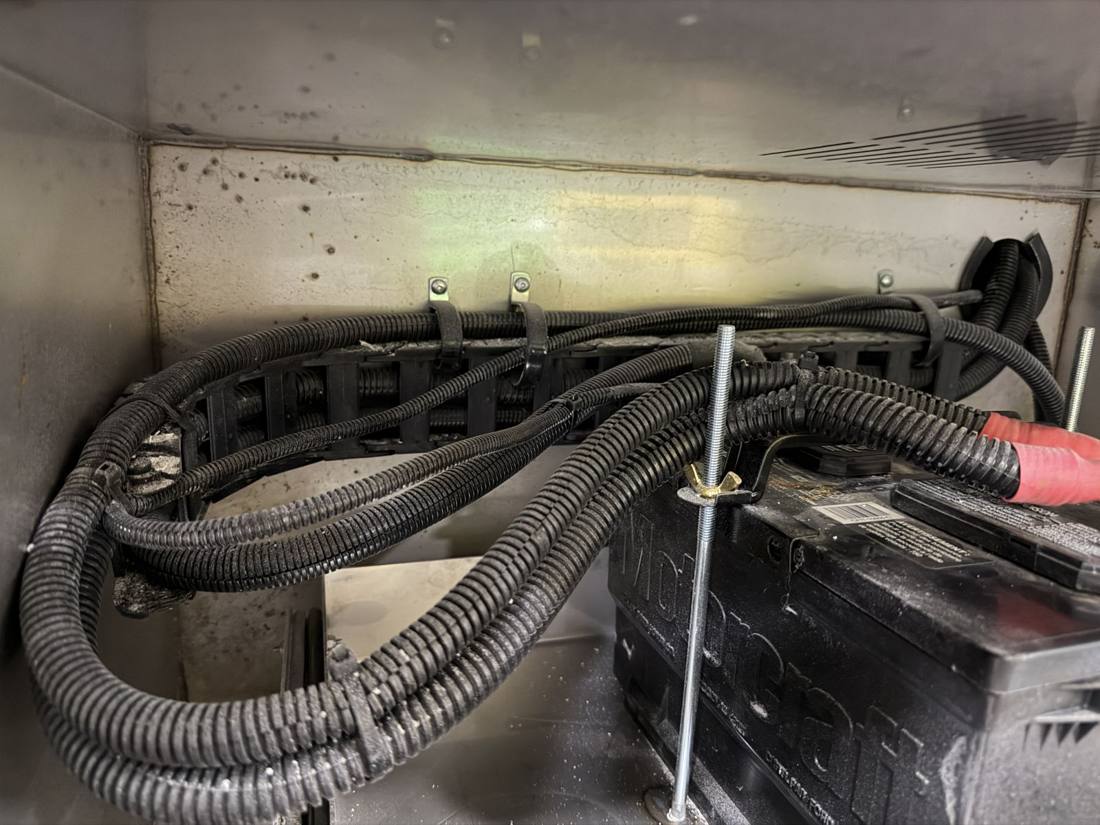
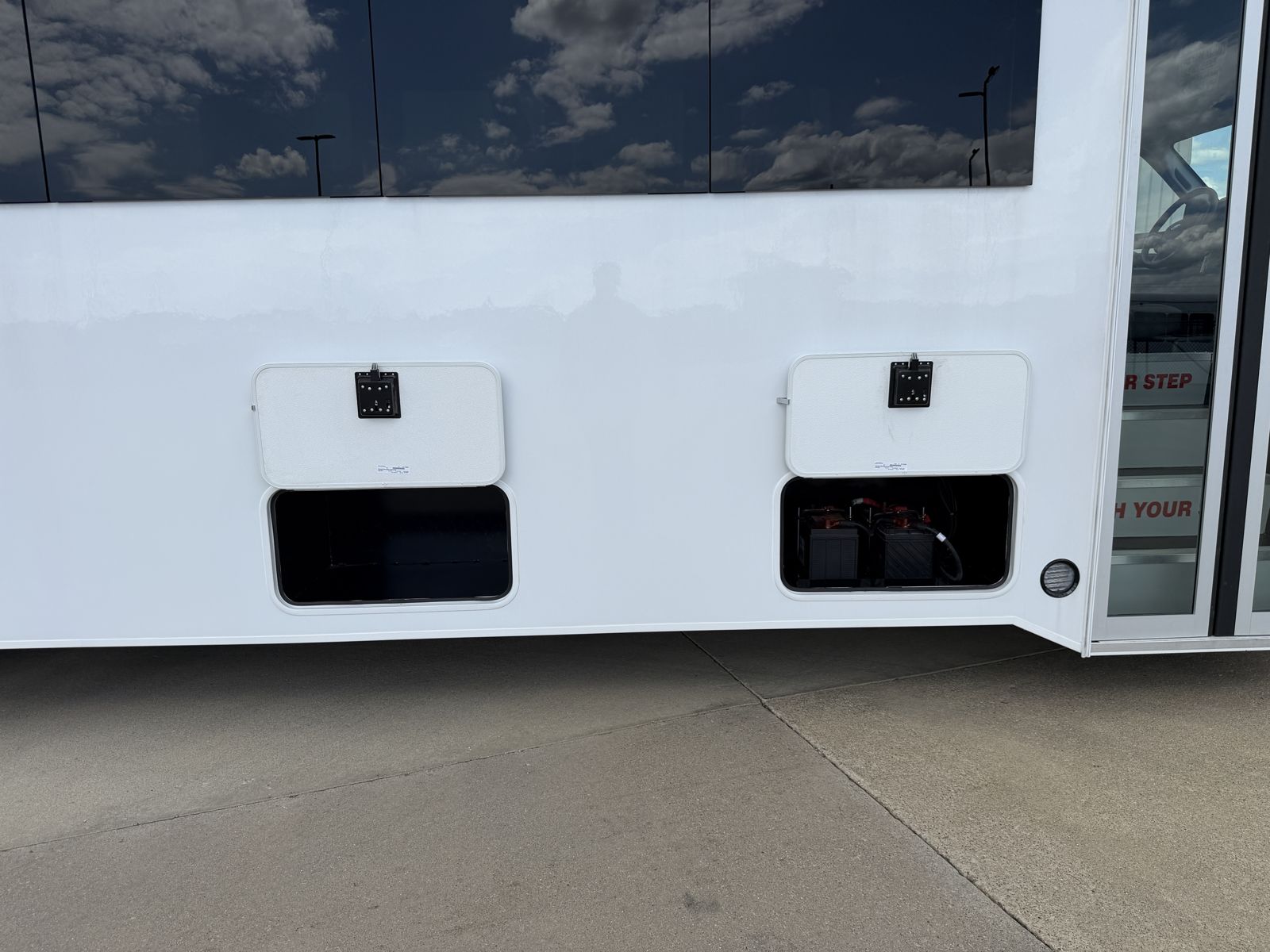
9. The details that save you later. The battery tray slides out on a track with a built-in cable guide, so the cables cannot pinch when the tray moves. The chassis exhaust is rerouted to exit at the streetside rear corner, away from the entry door and the lift, so passengers are never standing in it (standard on STRYKR, MAVRYK and KAVLYR; an option on STRATOS). Luggage compartments are framed in steel and sealed like the rest of the bus.
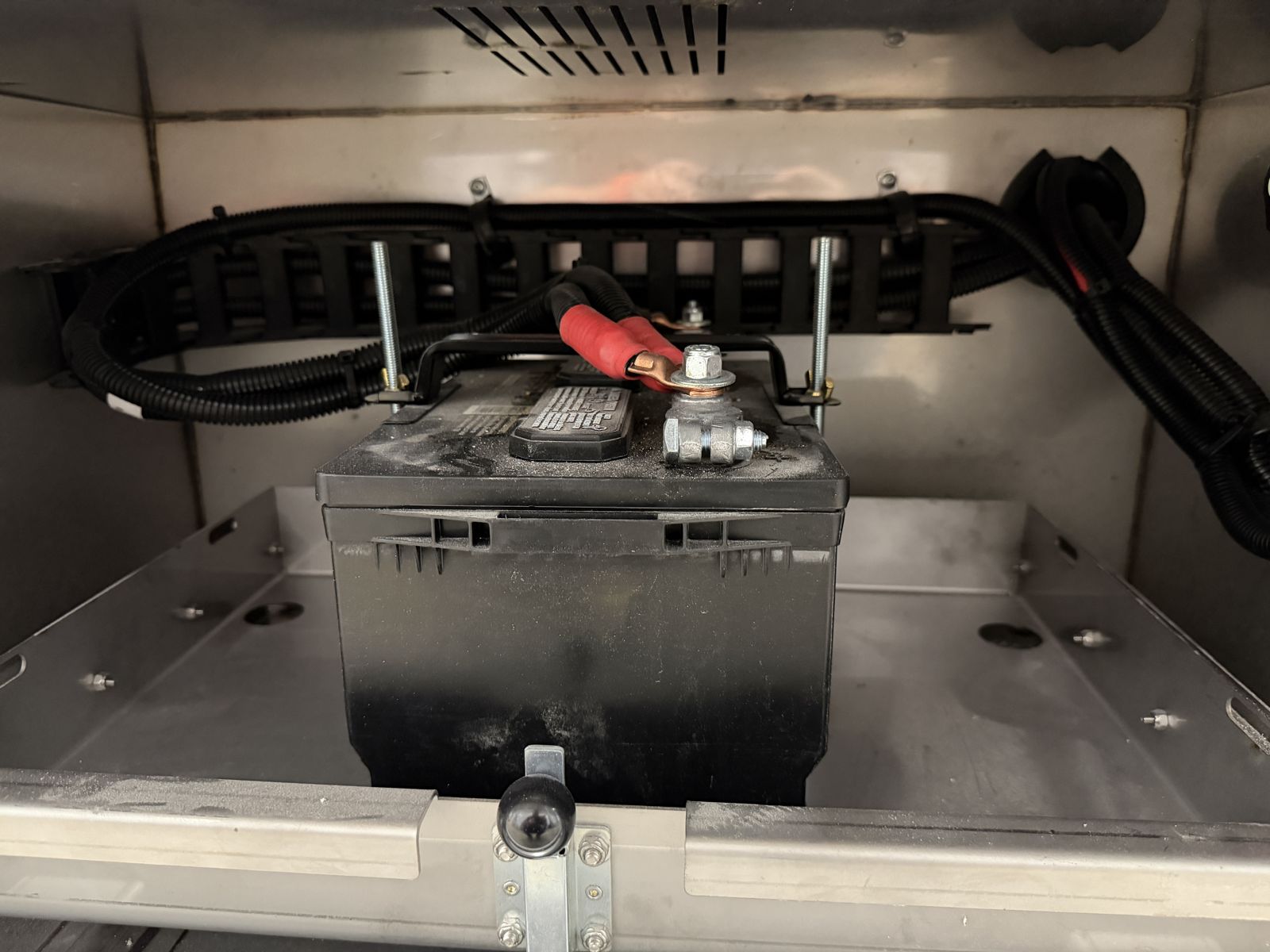
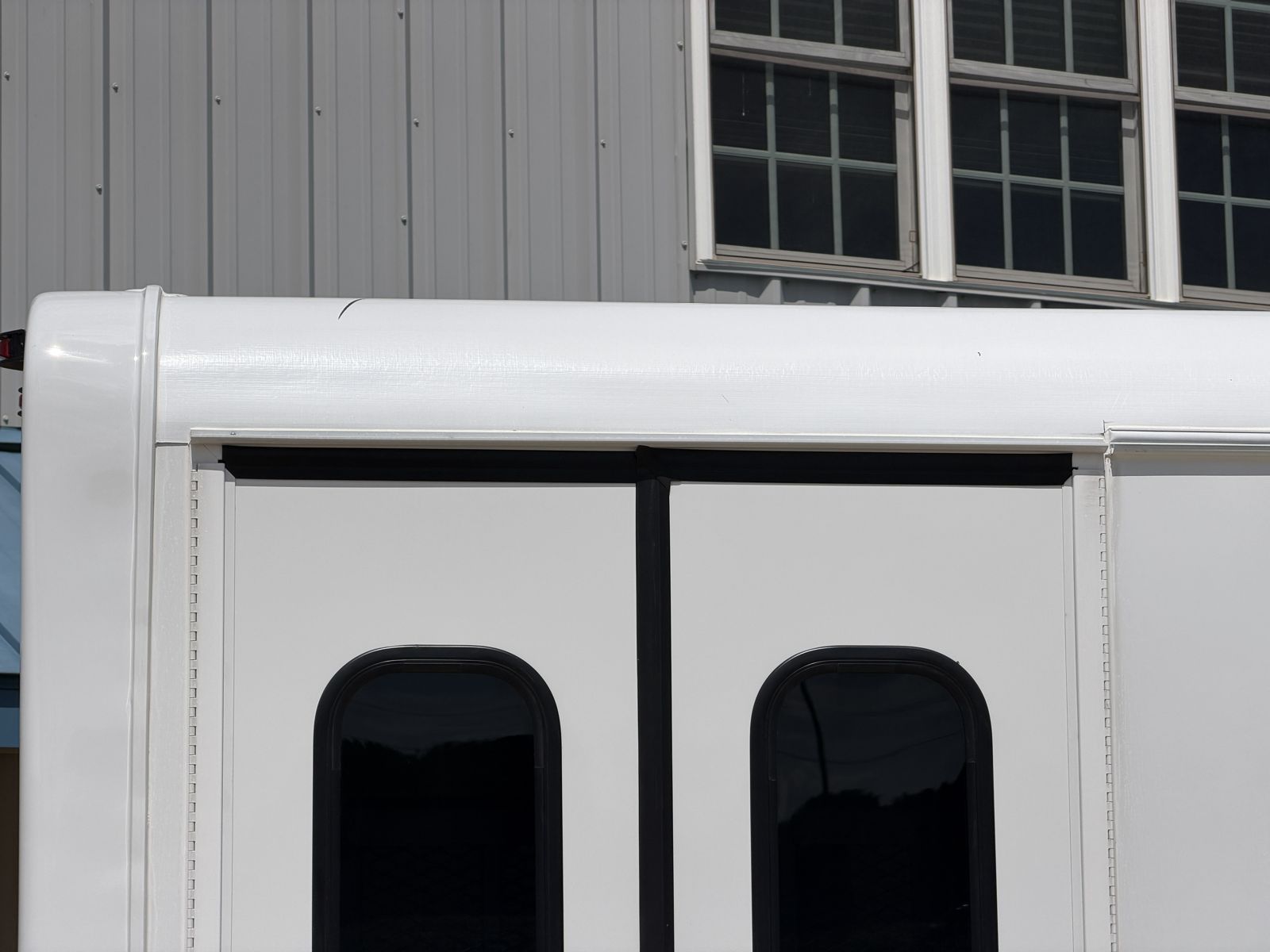
10. The rain booth and the road. Fifteen minutes minimum under full spray, longer when a spec calls for it, a person inside hunting leaks, every single bus. Then straight out the door into a 25-mile road test with hard braking and acceleration. A final inspection packet signs off every department before delivery.
11. The proof. Every model is FMVSS compliant. The MAVRYK passed the FTA Altoona 7-year / 200,000-mile test on the first attempt, with a 98% safety score and no road-call failures; the STRYKR is in test now. The report is public, and we will show you how to read anyone's.
We weld plain steel — no aluminized, no galvanized — as a permanent choice, because welding those steels makes welders sick. We use the steel that lets our welders go home healthy. Quality gets built by people who stay.
And we're deliberately not a forty-a-day line. Every bus is built on its chassis, moved station to station only when the group leader signs the check sheet.
Bring a bat for the roof sample. We mean it.