
Shop Notes · How a Bus Is Built
We wrote separately about what to do when your bus floor goes soft. This is the other half of that story: why it happens at all, why the industry keeps building floors that fail the same way, and what the alternative looks like — so your next bus doesn't repeat your current one.
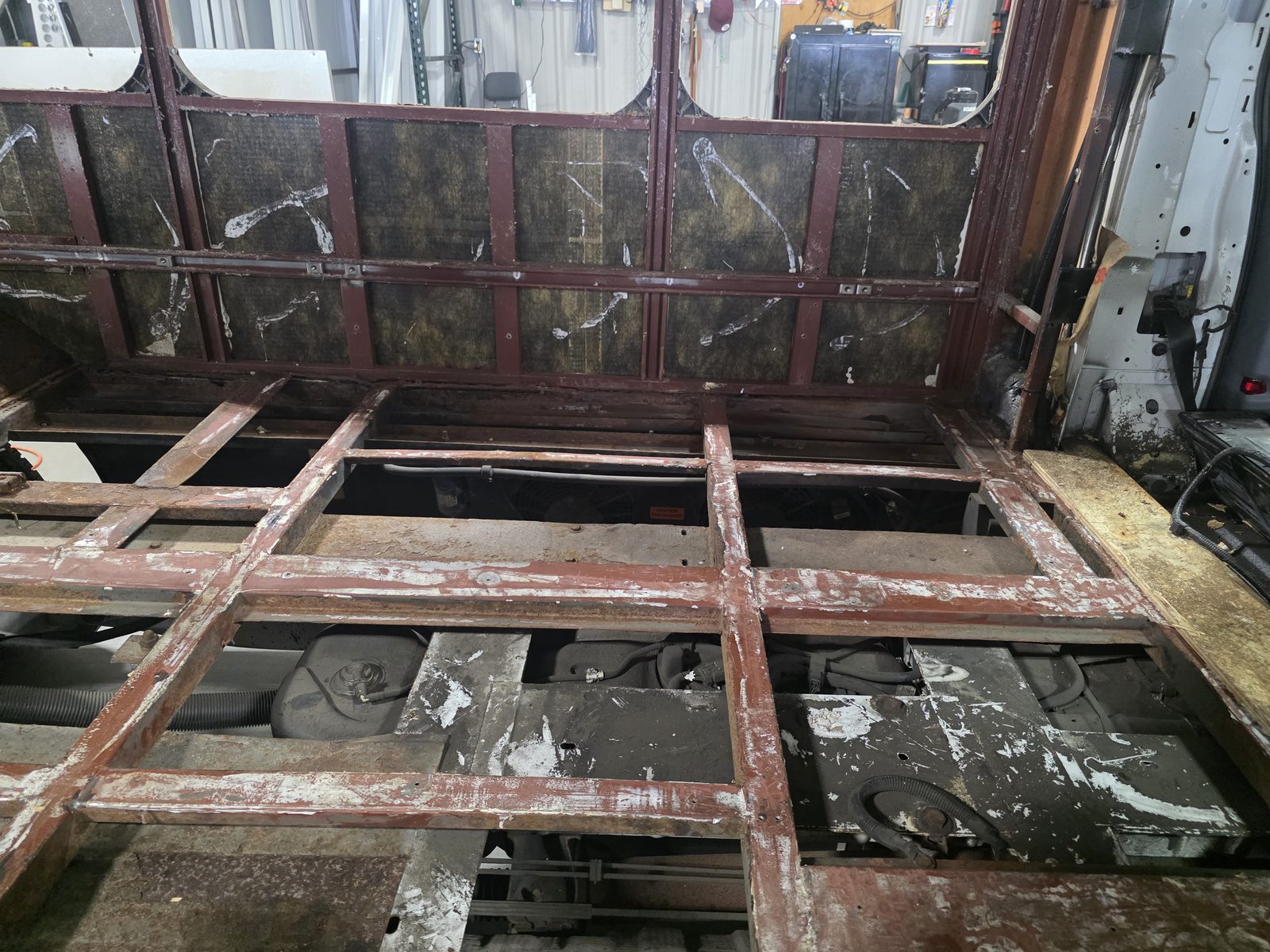
A shuttle bus floor is a stack: finished flooring on top (vinyl or rubber), a subfloor deck in the middle, and the steel floor structure below. The subfloor is the working layer — it spans the structure, carries the point loads (feet, wheelchair wheels, seat legs), anchors the flooring, and takes the screws.
For decades the industry default for that layer has been plywood. It's not a crazy choice: plywood is strong, stiff, cheap, easy to cut, and holds fasteners well. It has exactly one flaw. It's wood. And a bus floor is one of the wettest working environments in the vehicle world — boot slush, mop water, lift-door weather, spilled coffee from above; road spray, salt fog, and condensation from below. Vinyl flooring on top acts like a lid, holding any moisture that arrives in the wood.
Wet wood rots. Rot spreads. The floor goes soft, then the securement anchors loosen, then you're reading our other article. The industry has known this cycle for fifty years — plywood persists because it's cheap and the failure arrives conveniently after most warranties end.
The alternative is an engineered panel that keeps plywood's virtues — span strength, stiffness, fastener retention — in a material moisture can't decompose. We build on PerformMAX 500, a purpose-made composite structural panel, with an Ovation overlay as the working surface under the finished floor. The distinction that matters isn't the brand names; it's the material class: engineered composite decking doesn't feed rot when water arrives. Water still shouldn't get there — the wall and seam design upstream of the floor is most of that fight — but when a floor's worst week eventually comes, the deck shrugs off what would begin plywood's slow death.
We back that deck with a 7-year subfloor warranty — the longest term in the market — and the warranty is really the point of this article, for a reason that has nothing to do with us:
A subfloor warranty is a manufacturer's forecast, in writing, of their own floor. A builder who covers the deck against rot and water damage for many years is telling you what they expect it to do. A builder whose warranty doesn't mention the subfloor — read the documents; many don't — is also telling you. The floor is where the industry's confidence gap is widest, and the warranty page is where it's visible.
Composite decking costs more than plywood — it's one of the line items behind a better-built bus's price premium. Against it, put the going rate for one subfloor repair (four to five figures, plus downtime), the residual value of a ten-year-old bus with a solid floor versus a soft one, and the ADA-service risk of rot reaching a securement anchor. For a 3-to-5-year fleet cycle, plywood's economics can pencil. For the 7-to-15-year ownership that defines most shuttle buyers, the composite premium is among the best money on the order sheet.
Traditionally plywood decking over steel structure, under vinyl or rubber flooring. Better construction substitutes engineered composite panels that don't rot.
It resists water longer than standard plywood, but it remains wood — treatment delays rot rather than preventing it. Composite decking removes the failure mode.
A composite deck should outlast the vehicle. Plywood's life depends entirely on water exposure — anywhere from the vehicle's full life in a dry climate to under five years in salted, wet service.